Showing posts sorted by date for query traffic. Sort by relevance Show all posts

Tuesday, August 04, 2020

Born to Lead! Guest blog by Connie Goodman Milone


       I live in District 8 in Miami-Dade and fully support Cindy Lerner as a candidate for County Commission in District 7. Lerner will be an engaged and supportive commissioner who will fight for you. She is a child advocate who served as lead attorney for the Florida Guardian Ad Litem program. She was a state representative in Florida who fought to protect our drinking water. Lerner served as a state representative until her district lines were redrawn.

      Lerner is a former mayor of Pinecrest who transformed the village with a Climate Action Plan and the glorious Pinecrest Gardens. She created the Youth Advisory Council that provides leadership and civic engagement for high school students. 

      Mayor Lerner also created the Education Advisory Council to facilitate communication between the Village of Pinecrest and its five public schools. The council brought the Anti-Defamation League’s “No Place for Hate” program to the schools in Pinecrest.

      Cindy Lerner served as president of the Miami-Dade League of Cities. She organized local city leaders to address the threats from sea level rise, flooding, and extreme weather patterns in Miami-Dade County. Through time, Cindy has worked closely with state legislators to address critical issues we encounter at the state and local levels such as sea level rise.

      With her breadth of experience, Lerner understands what it takes to run a local government and to oversee a budget. She knows where to innovate and recognizes the value of collaboration. Her priorities as county commissioner will be traffic gridlock, Metrorail expansion, climate change, and sea level rise.

       Cindy Lerner has key endorsements from Sierra Club, AFSCME Florida, Teamsters Local 769, SAVE, Florida Conservation Voters, Vote Water, Miami-Dade Democrats, and Ruth's List. She is endorsed by all four state legislators representing voters in District 7. Honoring the legacy of John Lewis, she will make good trouble where needed on the County Commission. Vote by 

mail, vote early, or vote on August 18 for Cindy Lerner for County Commission, District 7.


Monday, July 23, 2018

How dirty is Miami real estate? A LOT DIRTIER than you think ... by gimleteye

It is time for reflection, after a long run as a Miami-Dade taxpayer. When I moved from the Keys to Miami in 1992, I embraced the challenge of calling attention to the importance of preserving open space and farmland as a buffer between the intensely developed areas of Florida’s most populous county and the fragile beauty of the Everglades. Previously, I spent nearly four years as an advocate for Monroe County marine resource issues and had become involved for the first time in my life in local county politics, part of a successful effort to run out of office a majority who had proudly called themselves, “The Concrete Coalition”.

In Miami-Dade I discovered two planning tools critical to protecting the downstream economy and environment in the Keys; 1) the Urban Development Boundary embraced by the county but under constant pressure by developers and the supply chain of special interests and 2) state law mandating comprehensive land use plans by every one of Florida’s counties.

“All growth is good” propelled Miami into the 20th century, but by the end of the century it was evident that a new model needed adjustments. These two planning tools were intended as a rationale framework to bring together competing interests. The problem, of course, is that the competition between civic values and private property owners is not fair. One of the ways failure manifests is through the unregulated influence of corporate law that encourages property owners and speculators to hide their identity through invisibility shields like limited liability corporations.

Every issue of concern to Miami Dade taxpayers — traffic congestion, overburdened schools, fire and police protection — manifests through county politics. And as we know, too well, county politics are extraordinarily influenced by deep pocketed donors who now, thanks to the Citizens United decision by the Bush Supreme Court, give unlimited amounts of money to support causes and candidates.

Today, there is attention on the decision by Mayor Gimenez and the majority of the county commission to support the extension of a major state highway, SR 836, into the southwest corner of Miami-Dade; exactly the geographic area that absorbed my interest after moving to Miami two and a half decades ago. It is as true today as it was then: it is impossible to know who one is negotiating with, when one’s opponent can shield his or her identity through a limited liability corporation, or, LLC.

Eye On Miami is virtually the only space in the media universe where this and related issues have been investigated.

We have mapped to the extent possible, with freely donated time and energy, the LLC’s behind the push that absorbs so much of the elected officials' attention. Sometimes the identities are well known — lobbyists, for instance, who are required to identify themselves. But those are just the tips of the icebergs.

A very small group of land speculators, who are extraordinarily wealthy through the growth of suburban sprawl, dominate the outcomes that put such huge costs on the backs of taxpayers. They’ve figured out the playbook to persuade voters that their cause is noble: ie. “jobs” and that opponents are “elitists”and worse.

If voters knew their names and could make the linkages, it would be a start to a level playing field. At least, then, there would be some “sunshine” to illuminate a path for voters. That’s why, in 2016, I was so excited to learn about an Obama Treasury Department initiative to require the disclosure of LLC ownership in property transactions, as a test case in a few areas of the nation. Miami-Dade was an obvious place to start. I wrote at the time, this was “the best story of 2016”. Attention was being paid.

The Herald's recent report, "How dirty is Miami real estate? Secret home deals dried up when feds started watching", is a book-end to the federal effort to find out who is behind the biggest land deals in South Florida. It turns out that as soon as the speculators found out the feds were watching, they stopped using LLC's..

LLC transactions declined by 95% during the study period. The breathtaking number answers the question, “How dirty is Miami real estate?” The answer: Very.

The land flippers and speculators who stand to benefit from Mayor Gimenez’ SR 836 jihad don’t want to be identified, but we know they exert profound influence.

The take-away is as true today as it was those long years ago: VOTE. If you care about Miami-Dade, your taxes, and your quality of life; vote for candidates who aren’t stuck on the suburban sprawl merry-go-round because they are tethered to campaign cash from special interests whose identities are shielded by corporate law.

Thursday, June 28, 2018

Karl Wickstrom, Florida Sportsman ... by gimleteye

Karl Wickstrom lead a purpose-driven life. That is high praise for a publisher who would not shy from s fight in which he believed, even if that fight impacted advertisers in uncomfortable ways. Karl, on behalf of Florida citizens, took on the state's commercial fishing industry and won. Read the memorial in Florida Sportsman Magazine for more.

Karl became a friend and colleague in the fight to protect the Everglades. He was plain spoken about the need for environmentalists and groups to be tougher, and that agreed with me. Florida Sportsman's memorial to Karl doesn't mention Big Sugar by name, but he frequently did. He railed against the power of a single industry, that contributes far less to the state economy than sports fishing, yet gets its way in the destruction of natural resources because of its political clout. And he was smart, too, cutting through the BS. In the late 1990's he quickly figured out that the Clinton / Bush initiative to "save the Everglades" was deeply flawed and called for the purchase of Big Sugar lands and the end of sugarcane production in the Everglades Agricultural Area. He took on the gill netters and stopped them in the cozy, good ole boys club of the state legislature by summoning the will of the people in a state ballot referendum, but the fight against Big Sugar was the fight of his life.

Karl decided to move the offices of Florida Sportsman from Miami to Stuart in the early 2000's. He had raised his family on Biscayne Bay and its beauty, but he tired of Miami-Dade's corrupt politics, of its mind-numbing traffic, and the decline of fishing in the bay. In Stuart, he found a better place to fish and a more receptive audience to preservation of natural resources. That past few years, especially, tested that assurance as waterways have been assaulted by the toxic outfalls from Lake Okeechobee vomiting toxic algae down the estuaries and along both Florida coasts.

Florida politics continues to protect the polluters who primarily cause the mismanagement of water resources: Big Sugar. Those of us in that battle have Karl's memory, and of other leaders recently departed, to guide our way in Martin County and in the state.


Karl Wickstrom: Champion of Anglers’ Rights
Florida Sportsman founder and champion of angler rights passes away at 82.

The extended Florida Sportsman family mourns the passing of Karl Wickstrom on Monday, June 25.

The extended Florida Sportsman family mourns the passing of Karl Wickstrom on Monday, June 25, in Stuart, Florida, his family at his side. Karl, founder of Florida Sportsman and a life-long advocate for recreational angling, was 82. He is survived by his wife, Sheila, his four children and three grandchildren.

“Not only did he [Karl] have a good idea of what to do, but he had the skills to carry it off—the same skills, actually, that he used to become a successful publisher, those being the ability to organize working groups into a single potent force, and to keep that force struggling toward the achievement of lofty goals, such as the statewide gillnet ban of 1995.” —Vic Dunaway (far left), founding editor, writing in 2012

Born 1935 in Rock Island, Illinois, Wickstrom earned a journalism degree from the University of Florida at Gainesville and soon after started his career as a sports reporter. In 1960, he moved to Miami to work for the Miami Herald as an investigative journalist, winning state and national awards for incisive reporting on corruption in public affairs. In 1969, he founded Florida Sportsman (first titled Florida and Tropic Sportsman), engaging Vic Dunaway, at the time a well-known outdoors writer at the Herald, to lead editorial efforts at the new magazine. Florida Sportsman quickly grew to become the leading source for information on Florida’s developing boating and fishing interests and importantly, the voice of the state’s recreational anglers and hunters on issues of access, management and environmental causes. Florida Sportsman celebrates its 50th anniversary in 2019.

Karl has always stood for the rights of the average angler and challenged the status quo, which he often did in his Conservation Openers and Conservation Minute series, like this one about fish closures.

Through the decades as publisher of Florida Sportsman, Wickstrom fought and won a number of legal changes to benefit Florida marine resources and recreational angling, garnering numerous awards along the way. Wickstrom was co-founder of the Florida Conservation Association in 1984, now Coastal Conservation Association (CCA). He was a benefactor of many other marine resource organizations, including The Florida Oceanographic Society in Stuart, the Rivers Coalition, The Martin County Anglers Club (which named the Wickstrom Reef after him) and a long list of others. His magazine voiced the concerns of recreational interests in countless disputes with fishery managers over allocations and access to waters, often winning decisions in the court of public opinion with his editorials in the magazine.

Wickstrom successfully ended the commercial sale of redfish in the whole state.

Wickstrom also worked to achieve gamefish status for redfish, ending commercial sale of the species in the state, and fought ceaselessly for the rights of recreational anglers subject to management policies that often favored commercial fishing interests.

“Karl was a great man and an equally great friend. He gave an incredible amount of energy to Coastal Conservation Association Florida,” said Ted Forsgren, Special Advisor to CCA.

Karl successfully ended the ‘mother of all fishing wars,’ with his Save Our Sealife campaign, which led to the ban of all gill and entanglement nets.
“We went through so many battles over the past 35 years that I can hardly list them. Some of the big issues included gamefish status for redfish, blending two agencies into one constitutional fish and wildlife commission and banning fish traps in federal waters. And of course, the constitutional amendment prohibiting the use of gill and entanglement nets, the ‘mother of all fishing wars,’ as one of the commercial fishing lobbyists called it.”

Karl can be seen here in his natural habitat, fighting for you and the waters you enjoy, with enthusasiam, wit and just the right level of bitterness for unfair practices.

That battle was one of Wickstrom’s biggest victories in the name of marine resources and recreational angling. It came in the early 1990s, when he mounted the Save Our Sealife Initiative to end the destructive use of gillnets in Florida waters. The movement came to be known as the net ban, and Wickstrom and Florida Sportsman were key leaders in the campaign to amend Florida’s constitution to ban the nets. In 1994, the constitutional amendment that the campaign put to ballot passed with 72 percent of the vote. In the years following Florida’s fisheries rebounded dramatically.

The campaign needed 429,428 validated signatures to get the amendment on the ballot; it collected 520,000.

After the net ban victory, Wickstrom turned much of his attention, and his writing in Florida Sportsman, to the fight against the environmental disaster of chronic Lake Okeechobee water releases through the St. Lucie River and the Caloosahatchee rivers. For decades he supported the Rivers Coalition and other organizations in that statewide battle for cleaner waters for Florida estuaries and the Everglades.

Karl didn’t shy away from big issues and spoke out about questionable practices, inspiring others to follow in his footsteps, becoming a beacon for change.

“In his long history as a writer, editor and conservationist,” said Mark D. Perry, Executive Director, Florida Oceanographic Society,

“Karl Wickstrom was a champion for Florida’s waters through several campaigns. Karl fought for our northern estuaries to stop the destructive discharges from Lake Okeechobee and send that water south to the Everglades and Florida Bay. He was a tenacious and effective advocate for our waters and I was honored to fight alongside this incredible champion.”

Karl surrounded by his three sons (left to right) Blair, Drew and Eric on the night of his induction into the IGFA Hall of Fame.
Wickstrom earned a long list of publishing and conservation awards. In 1995 the American Sportfishing Association named him “1995 Man of the Year” for his work on the gillnet ban. In 1999 he won The Billfish Foundation’s John Rybovich Lifetime Achievement Award. He was inducted into the International Game Fish Association’s (IGFA) Fishing Hall of Fame in 2008.

“Karl Wickstrom has always displayed a fierce will to protect Florida’s waters and its fish populations, taking on everyone from governors to bureaucrats to captains of industry anytime he saw a threat to the future of the resources,” said Frank Sargeant, editor of The Fishing Wire and a regular contributor to Florida Sportsman since 1970.
“I also remember Karl’s quick and incisive wit, and his ability to endlessly have a good time on the water. When the snook were not biting, Karl might propose a ‘who can put the lure closest to the mangroves’ casting contest. That usually resulted in one of us sticking his head in among the incredible clouds of no-see-ums to extract our lure while the other mercilessly drove the boat further into the bushes. It was always fun, even when we came back to the dock bug-bitten and empty-handed.”

“When the snook were not biting, Karl might propose a ‘who can put the lure closest to the mangroves’ casting contest.” said Frank Sargeant
In 2015, Karl won CCA Florida’s Ted Forsgren Conservation Award. At the time of that CCA award, presenter Bill Camp, past chair of CCA, said of Karl,

“The Net Ban. Water quality. Recreational angler access. Sound resource management. Common sense. Karl Wickstrom has been your voice on these concerns and issues. Our voice. It’s the voice you want on your side. Unyielding. Passionate. Witty. Smart. Totally awesome.”

Wickstrom was also respected and influential in political circles, as well.

“When I first ran for public office 16 years ago,” said Sarah Heard, Martin County Commission officer since 2002, “Karl was the first person I contacted for support.”

“No one in Florida enjoys or deserves more respect and admiration for his conservation credentials than Karl does. In a state notorious for flim flammers and greedy scammers, Karl stands out for his integrity and commitment to the natural resources of our state.”

As lauded as he was publicly for his accomplishments in conservation of wildlife resources, Karl Wickstrom was also well loved by his readers for his emphasis on the value of fishing and hunting in their lives. For nearly 50 years now, the magazine Karl started has spread both of those messages throughout Florida and across the U.S, and the interests of outdoor enthusiasts have been much stronger for his achievements.

Karls accomplishments will ring on through the ages. He will be remembered as one of the most influential and passionate conservationists in Florida history.
“People might be reminded that the chief examples of Wickstrom’s legacy are actually written into Florida law,” said Jeff Weakley, current editor of Florida Sportsman magazine. “In the state Constitution, ‘Article X, Section 16: Limiting marine net fishing,’ is practically his own. Karl also envisioned and championed passage of ‘Article IV, Section 9: Fish and wildlife conservation commission.’ Ongoing legislative work—challenging and exciting—to reclaim Florida’s natural-flowing estuaries in part reveals his handwriting.

“Karl’s work has entertained and inspired generations of readers,” Weakley said.

“His legacy continues to shape the very philosophies and systems that govern the conservation and public use of natural resources.”

Thursday, June 21, 2018

When It Comes To Highways and Development: A Clear Case Of Fraud And Political Malpractice ... by gimleteye

Here is what I would say to residents of Kendall crying about commuting time and the helplessness of families strained by disastrous transit: many of the same county commissioners who decided yesterday to adopt Mayor Gimenez' plan to add more lanes into former Everglades wetlands are the SAME OFFICIALS who benefited from and profited, politically and economically, from the advancement of suburban sprawl that created traffic nightmares in the first place.

This fact is underrepresented in local media accounts. Call it: the power of advertisers. At any rate, consider the following from yesterday's Miami Herald report on the 9-2 vote and the comment by county commissioner Joe Martinez:

"... Martinez, who represents West Kendall, called the extension a matter of fairness for the western suburbs who pay the county's half-percent transportation tax but have no transit options beyond the Miami-Dade bus system.

"They have been paying the half cent, at almost $400 per household per year," Martinez said. "And received nothing for it ... except traffic gridlock."

Why, so much gridlock? Because of zoning decisions by electeds like Martinez himself. You don't have to look further than this Eye On Miami report from 2007 (!) when I had the stomach to pay closer attention to the fraud and political malpractice than I have, today. We keep this record and archive, for moments exactly like this.

Lastly, readers should understand that not-so-long ago, citizens had recourse to challenge political malpractice by local county government. There were provisions in state law, created by bipartisan consensus in the 1980's, that empowered citizen challenges to bad decisions that ran counter to sound economics and public safety and the environment.

A series of Republican administrations in Tallahassee, triggered by Gov. Jeb Bush, and culminating in the two terms of Gov. Rick Scott is primarily responsible for undercutting the ability of citizens to use state courts to fight bad land use decisions. Democrats in the state legislature sat on their hands, too, because of the money race. And now we have a Congressional majority supporting the anti-regulatory agenda of a chaotic president. So: no state authority. No federal authority. (Except when it comes to protecting the rights of polluters and the invasion of privacy.)

Gimenez is dead-wrong on his logic for expanding SR 836, and somewhere in the recess of his soul he knows it. Gimenez, once upon a time, could articulate the argument as well as anyone on the commission. But there is power to be accumulated and money to be made in the meanwhile and a political machine to feed.

Only voters can change this equation, if they are informed.

Tuesday, June 19, 2018

Biggest Upset in Miami Dade County History: Eileen Higgins is County Commissioner for DiEileestrict 5. By Geniusofdespair

Eileen Higgins with Her Communications Campaign Manager. Eileen easily beat the favorite and better funded - Zoraida Barreiro.  We have now lost a charter member of the unreformable majority and replaced him with what might be the difference on all the shitty votes in the County. If only Sally Heyman would realize she is a Democrat, we might move things the right way with Higgins, Levine-Cava, Suarez and Monestime.


More photos from the victory party:

Happy Higgins.

Well funded Barreiro was trounced by Higgins.

Eileen Higgins and Cindy Lerner

As for the 836 Expansion:

Zoraida Barreiro pointed to pleas from homeowners for an alternative to Krome Avenue or Florida's Turnpike as a way to connect with the 836.

"This is something that is needed in that area. The residents of Kendall want it," Zoraida Barreiro said during the debate hosted by Glenna Milberg and Michael Putney. "They've been asking for it. They need it. It's been horrible traffic in that area. That's going to help."

Higgins said building new roads hasn't helped traffic in Miami-Dade yet, and pointed to warnings that low-lying areas in the west have significant risks for flooding from a rising water table.

"I worry very much about putting any sort of development, including roads, outside the Urban Development Boundary," she said. "Anybody that witnessed the horrific flooding in Houston, when they begun to encroach upon their wetlands, knows the danger of taking our protected wetlands around from us, given what's going on with sea-level rise."


Higgins will not be sworn in until Friday but the hearing on 836 is tomorrow. I wonder if she will be speaking from the floor? I wonder if the vote can be postponed.


MEANWHILE...

County Commissioner Daniella Levine Cava has a motley crew of 3 running against her.


They are a bit behind on the fundraising front.

Short-Sighted Manipulation of People of Kendall. Guest Blog by Richard Grosso


Miami-Dade Mayor Carlos Gimenez’s desire to alleviate traffic congestion in West Kendall is understandable. His attack on those raising concerns is not. The opposition to the extension of the 836 highway outside of the county’s urban boundary is based, not on “misinformation,” but serious concern, based on history and the realities of development practices and economics, that the county would be making a huge mistake.

Addressing traffic problems in the 21st century with a 1970s solution of building more highways is a bad investment given what we now know about how quickly new roads fill up with new traffic and open areas to new development, and about the critical need to shift away from infrastructure for cars and toward real mass transit. Miami-Dade County’s land use plan specifically reflects these understandings and, for these reasons and others, contains explicit prohibitions against building new public infrastructure — like this highway extension — beyond the Urban Development Boundary.

The looming decision of whether to invest $650 million into another highway expansion or modern mass transit comes at a pivotal point in this county’s history, as it is coming to terms with the necessity of re-working its water supply and flood-protection system, reducing its vulnerability to climate change and sea level rise, and restoring the Everglades upon which it relies for so many economic, recreational and other purposes. It is concerning that some in county leadership may not understand that building a highway through the Bird Drive Basin wetlands would compromise the restoration project water managers are still designing for those lands to prevent flooding and restore previously impacted wetlands in western Miami-Dade County.

The PR campaign to promote this highway may be selling fool’s gold to West Kendall residents, and the county would soon be looking for yet another new road in a few years when this one fills up with new traffic — whether or not it leads to new development in the area.

Miami Herald


Big week in Miami-Dade County: District 5 county commission and SR 836 Extension at County Commission ... by gimleteye

Many years ago I founded the Hold The Line Coalition in Miami-Dade. It was an effort that grew out of earlier efforts to protect the Urban Development Boundary from the titanic forces of suburban sprawl. Not state laws or even the threat of an economic collapse in housing markets dented sprawl's momentum.

Today, traffic is so congested and intractable for many reasons but one in particular worthy of note this week: the un-reformable majority of the county commission permits massive new development to proceed without adequately planning, funding and implementing reasonable transit alternatives.

There is a county commission election today in the district serving much of Miami Beach and central Miami. The outcome will indicate whether voters have made the connection between traffic nightmares and a nightmarish county commission.

Eileen Higgins is the right candidate at the right time for District 5. Her opponent, the wife of longtime incumbent Bruno Barreiro, represents the lobbyist class and the sprawl supply chain who count on the county commissioner from Miami Beach to vote -- like the one TOMORROW at the county commission -- for more and more sprawl into former Everglades wetlands.

There is resistance to the plan by Mayor Carlos Gimenez to expand one of the arterial roadways in Miami-Dade into farmland and toward the Everglades. If you want to be part of that resistance, please show up at the county commission on Wednesday to lend your support.

If you want to be part of a rising tide of resistance and live in District 5, VOTE FOR EILEEN HIGGINS.


Here is a note from Sierra Club:


MIAMI GROUP
ACTION ALERT! #HOLDTHELINE

Dear Sierra Club Miami Group members and supporters,

Please take the time to call your county commissioner and key swing votes to stop the expansion of the State Road 836 toll road, and attend the County Commission Meeting, Wednesday to speak against it.

Why is this project a bad idea?
· This project would lead to increased urban sprawl
· This project would endanger freshwater resources
· This project would put citizens at risk: The lands in this area are low lying and flood prone.
· ​This project would displace agricultural land and harm our agricultural economy.

This project sits in direct conflict with everything the County should be doing to make us more resilient in the face of sea level rise. There’s an urgent need for infill development in high density areas near existing or planned transit corridors.

The only way forward is to look for sustainable solutions with a plan to build our infrastructure based on smart growth in policies and investments that encourage infill development, walkability, and transit oriented development which could be achieved by implementing the Seven50 plan (seven50.org),which could be operated in conjunction with the SMART plan to offer a better menu of transportation options with a chance to build a strong, competitive, environmentally responsible and resilient region.

Read more on these risks.

What to do

Steps 1 & 2: Call & Email your own Commissioner and the swing votes in bold, ask them to HOLD THE LINE and deny SR 836 application 8, and to support transit-oriented infill development instead. Green means already in support. Plain means no need to call.


District 1: Barbara J. Jordan
Downtown 305-375-5393
District 305-636-2331

District 2: Jean Monestime
Downtown 305-375-4833
District 305-694-2779
District2@miamidade.gov

District 3: Audrey M. Edmonson
Downtown 305-375-5393
District 305-636-2331
District3@miamidade.gov

District 4: Sally A. Heyman
Downtown 305-375-5128
District 305-787-5999
District4@miamidade.gov

District 6: Rebecca Sosa
Downtown 305-375-5690
District 305-267-6377
District6@miamidade.gov

District 7: Xavier L. Suarez
Downtown 305-375-5680
District 305-375-5680
District7@miamidade.gov


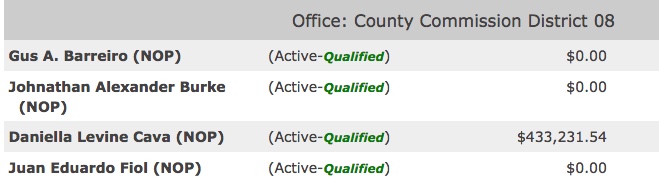
District 8: Daniela L. Cava
Downtown 305-375-5218
District 305-378-6677
District8@miamidade.gov

District 9: Dennis C. Moss
Downtown 305-375-4832
District 305-245-4420
District9@miamidade.gov

District 10: Javier D. Souto
Downtown 305-375-4835
District 305-222-2116
District10@miamidade.gov

District 11: Joe A Martinez
Downtown 305-375-5511
District 305-552-1155

District 12: Jose “Pepe” Diaz
Downtown 305-375-4343
District 305-599-1200

District 13: Esteban L. Bovo Jr. (Chairman)
Downtown 305-375-4831
District 305-820-8424
District13@miamidade.gov


Where & When?
Step 3: Speak out at the Miami-Dade Board of County Commissioners Meeting on Wednesday, June 20, 8:30 a.m.

Address: Stephen P. Clark Government Center;
111 NW 1st Street; Commission Chambers
Miami, Florida 33128. 2nd Floor

Take Metrorail to Government Center!

Thursday, June 14, 2018

On Transit And The Environment, In Miami-Dade It Is Always A One-Way Conversation ... by gimleteye

Why do we have the same "dialogue" about transit and the environment, every few years in Miami-Dade? Because it is not a dialogue. A dialogue is between parties. What we have in Miami-Dade are dialogues for "show" and to maintain appearances.

In fact, this critical policy area affects everyone's life here. Every single day, commuters are confronted with the consequences of poorly planned transit and the constant shifting of goal-posts where it comes to our quality of life.

Transit and the environment is a one-way conversation. Between big sprawl developers, large-scale farmers, and their industry associations, supply chains and the politicians they support.

Although there is citizen resistance to the one-way conversation, every time there is an issue like the extension of a major highway (in this case, SR 836) it needs to regenerate. Gov. Rick Scott and the state legislature made sure that citizen resistance to growth and transit plans had minimal traction through the administrative courts. And over time -- especially after the Citizens United decision by the Bush Supreme Court in 2010 -- developers and their attorneys turned to challenging protesters and imposing significant costs like counter-lawsuits against the resistance.

Moreover, among protesters -- from neighborhood associations to civic groups and environmentalists -- there is no institutional connection between one generation of opposition and the next. Because there is no institutional connection, there is no funding or money to fund the resistance beyond the indignation against the next tranche of assaults against the environment and quality of life through zoning decisions at the county level.

The Knight Foundation -- which has the funding capacity to provide that institutional connection -- could have chosen to assist this critical area of public policy in the past. There were many, many chances. But the Knight Foundation leadership never had an appetite for conflict with developers, their downtown law firms and lobbyists. The celebrity culture has not been kind to Miami's natural environment or to the cause of middle-class commuters from distant suburbs to downtown jobs.

On the other hand, the connection between electeds and the developer class is hard-wired. The money is always there. It is used to exploit the profit formulas of converting low-cost farmland (former Everglades wetlands) into suburban sprawl. Citizens are fragmented. Finance and insurance is united to a single goal: build as much, as fast, and as profitably as possible. Advocates for sprawl have perfected marketing pitches that include paid-for local crowds to support more of everything that is bringing traffic to a crawl and closer and closer to the Everglades.

Next week, the county commission is poised to approve a major roadway extension using the argument -- long known as a lie -- that expanding highways relieves traffic congestion. Mayor Carlos Gimenez, who is term-limited, and retreaded county commissioner Joe Martinez are leading the way. Gimenez and his staff, in a meeting with environmentalists, asked for an "alternative" to widening SR 836. The invitation was a baited trap.

Citizens have had victories along the way, but these are skirmishes in a battle that has defined our political culture.

On June 19th, there is a landmark opportunity for one county commission district to change direction. In District 5, voters will elect a new county commissioner. Eileen Higgins is challenging the wife of Bruno Barreiro who resigned his seat to run for Congress. Barreiro had been a charter member of the unreformable majority who rubber-stamped zoning changes and expansion of development beyond the urban development boundary.

Electing Higgins would send a message, if voters have enough sense to give her a chance on the county commission to change the one-way conversation.

Saturday, June 09, 2018

Vote For Eileen Higgins, County Commission District 5 ... by gimleteye

Democrat Eileen Higgins is taking on the wife of former county commissioner Bruno Barreiro in a June 19th runoff for District 5. Barreiro is another pair of hands, holding down taxpayers under water.

News arrives from the Miami Herald, that her husband's Congressional committee has donated $100,000 to his wife's campaign; making donors to Barreiro's bid the biggest donors to his wife.

How fucked up is that?


There is only ONE Point to know about Bruno Barreiro's run as a county commissioner: he was a reliable pro-development vote at every single turn that lead to the rampant traffic and chaotic growth that is imposing billions in unabsorbed costs on Miami-Dade taxpayers.

In other words, he was -- on the dais -- a mumbling disaster. Eye On Miami frequently cited Barreiro as a charter member of the "unreformable majority" of the county commission. (We strongly encourage District 5 voters to read our archive on Barreiro: it's a doozy.) The Herald report, in fact, cited Barreiro's "reliability" to the donor class.

Here is to hoping that District 5 voters get the point: we need an antidote to the political party that brought us Donald Trump, but we also need a practical voice of reason and sound common sense to strengthen the chance for meaningful change in Miami-Dade County.

Monday, June 04, 2018

Transit Hearing Wednesday at County Commission. By Geniusofdespair


Miami-Dade Metrobus, Metrorail and Metromover workers have been without a contract for more than three years - thanks to Mayor Gimenez and his staff.

The workers, members of Transport Workers Union Local 291, have been calling on elected officials to support public mass transit in Miami-Dade by increasing funding and increasing service that riders need so badly.

The traffic situation is getting worse - and public buses and trains are the answer.

Wednesday is the Board of Commissioners hearing on the contract dispute. 

Support our Union, support our transit, call your good for nothing County Commissioner and have them help the Transport Workers. They stood with us during a rally in Cutler Bay on February 3rd. Now stand up for them, help them get their contract. Conservatives would love to end our Unions but these organizations help our middle class get a living wage, in other words, Unions are the backbone of the dwindling middle class in America. Since the Republicans in congress recently were kind enough to give tax cuts to the wealthy Corporations, isn't it fitting that the middle class get something in return, like living wages and benefits for middle class members?


I am now without a car and these are the people I must rely on...if I can cross U.S. 1 in one piece to get to Metrorail. I can walk to Metrorail, I just can't get there safely to get to the County Commission Meeting Tuesday. What a bitch. But that is another post. I am doing my part to help traffic, I am one more person off the road, just like Eileen Higgins who is running for Bruno Barreiro's County Commission Seat, District 5. Vote for Eileen Higgins if you are in the district, if not, tell everyone in Miami Beach and Brickell that you know to Vote June 19th.  It is crucial to get the Barreiro dynasty out (his wife is running against Eileen).

Pictures of County Commissioners from the Transportation Summit:

Commissioner Xavier Suarez
County Commission Chair Steve Bovo
County Commissioner Daniella Levine Cava

From Clarence Washington, president of Transport Workers Union Local 291:


“We’ve tried to bargain in good faith with the mayor, but he is obsessed with trying to break our union and hurt our working-class members, who are primarily African-American and Latino. He is making demands on TWU Local 291 that are much more onerous that what he demanded from other municipal unions. We’re hoping the Board of Commissioners recognize this irrational imbalance.”


Saturday, May 12, 2018

America Dream Mall: A Totally Predictable Nightmare ... by gimleteye


Next week the Miami-Dade County Commission will vote on the America Dream Mall; one of the largest, if not the largest, malls in the United States, to be built in the northwest corner of Miami-Dade County. From the point of view of traffic and infrastructure burdens on taxpayers, it is a predictable nightmare.

Before Gov. Rick Scott, citizens had a place -- state administrative court -- and a roadmap, through the Florida Department of Community Affairs, to challenge development schemes that were manifestly against the public interest. A good example, from the 1990's, Wayne's World: the dream child of the late Wayne Huizinga. Blockbuster Park, its formal name, was planned just across the county line in Broward -- not far from the America Dream Mall site. It speaks worlds that an ill-conceived regional development could be halted in the mid 1990s but not in 2017. Some call that progress.

Gov. Scott delivered the coup de grace to the DCA, consigning the agency and its mission to a Tallahassee broom closet. At the same time, developers gained the upper hand by imposing massive costs on citizens with the temerity to challenge local zoning decisions. And, the USSC Citizens United decision opened the door to unlimited campaign contributions by corporations and provided further energy to the dark money pools that are making a mockery of democracy.

In other words, a lot of stuff had to be broken for a plan like the America Dream Mall to make it through. Behind it, in the pipeline, more predictable nightmares: the extension of SR 836 into the last remaining farmland and open space in Miami Dade, the construction of another Walmart in the county's last remaining pine rocklands, and further attempts to move the Urban Development Boundary.

The Florida Department of Community of Affairs, through its development of regional impact programming, was never completely aligned with the public interest in sound development and growth. It was born, however, out of a bipartisan consensus in the state legislature in the 1980's; a time when an older generation of electeds agreed that a system of checks and balances was needed to stop the profit motive from wrecking what Floridians held of value and in trust for future generations.

The development supply chain, industry trade associations like the Florida Chamber of Commerce and Associated Industries, and Big Agriculture fought DCA from the start. Gov. Jeb Bush, through establishment figures like Al Hoffman and the Council of 100, used DCA for target practice. For citizens, and the few civic organizations that plunged into the turbid waters of the state's overdevelopment, challenging developments of regional impacts offered a ray of hope.

Gov. Rick Scott squashed that hope; a fact voters might want to remember this November as if the land clearing, bulldozers, and site development of America Dream Mall will not be enough.

Friday, May 11, 2018

How Gov. Rick Scott Crapped In Florida's Water Future: the case of George Lindemann v. Maggy Hurchalla ... by gimleteye

We've written exhaustively about the lawsuit and its implications: that Maggy Hurchalla (nee Reno) -- born and raised in what is now Kendall -- finds herself on the tip of a spear used by Big Sugar and its proxies to privatize Florida's water supply.

Tampa Bay Times journalist Craig Pittman adds to the record of a dismal case: George Lindemann v. Maggy Hurchalla.

Hurchalla and her legal team, including Sandy D'Alemberte's firm, are appealing on first amendment grounds.

The case is Kafka-esque, (read our archive for more detail), and here is a key take-away: the lawsuit and its outcome against Hurchalla would NEVER have happened if the South Florida Water Management District stood up for taxpayers instead of special interests who control the state.

This is on Gov. Rick Scott. The governor appoints the board of the South Florida Water Management District. Throughout eight years in the executive office, Scott used his authority to turn the District into a cudgel against civic leaders with the temerity to push back against distortion of fact, science and policies intended to deliver safe, affordable water to Floridians and to protect the environment.

The weapon was freely wielded at public meetings of the board, led for most of Scott's tenure by his former counsel: Peter Antonucci. Antonucci had plenty of assistance from other Scott appointees, culled from the regulated communities. ie. Big Sugar.

During Scott's terms, any pretense of fair and equitable management of Florida's water future was abandoned. (What Scott claims as his major accomplishment -- $900 million for Everglades restoration projects -- was only the result of a Clean Water Act lawsuit by the Miccosukee Tribe of Indians and Friends of the Everglades.) One had to be among the community of civic activists -- like Hurchalla, today -- and environmentalists who attended District meetings in West Palm Beach to experience the Kafka-esque story unfold.

Among its ironies: in his second run for governor, Maggy Hurchalla was the only environmentalist who Gov. Scott personally reached out to, for support. He made a quiet visit to Hurchalla's home in Martin County to respectfully solicit advice, hoping word would spread that he was not such a bad guy after all.

Managing water in Florida is a multi-billion dollar industry. It is a good old boy network that Gov. Scott turned to this purpose: to maximize political power and outcomes to his own ends. That includes becoming the next US senator from Florida.

At Eye On Miami, we speculated that George Lindemann was put into the Lake Pointe deal by Big Sugar friends; formidable inside players deploying hundreds of thousands of acres of farmland south of Lake Okeechobee to whatever purpose turns the highest profit. Until he invested in Lake Pointe, Lindemann had no traffic with wetlands, with the Everglades, or with Florida politics. But he was familiar with the Fanjuls.

Selling rainfall to Floridians is part of the ultimate scam of Gov. Scott and his Republican cronies, including Agriculture Secretary Adam Putnam.

Putnam has been aiming for over a decade to be the next Republican nominee to be governor of Florida. (For further insight to Putnam, read our archive here.)

Farming water is not new to Florida, but morphing into a private right -- and socializing the risk -- has occurred with virtually no attention by the media. For example, the most recent water-future related state legislation, a 10,000 acre, 30 foot deep, $2 billion Everglades reservoir now heading to Congress for approval of its share for funding, turned into a Trojan Horse for Big Sugar through -- among other faults -- a provision requiring taxpayers to fund engineering and design for water storage and cleansing marshes owned by the Fanjuls west of West Palm Beach that could then be used to sell rainwater to Floridians. For the most part, the mainstream media missed this little poison pill.

Craig Pittman, who co-wrote the book on wetlands loss in Florida -- a massive scheme during the Jeb Bush years -- is a bright exception. Pittman and Matt Waite's 2009 book, "Paving Paradise: Florida's vanishing wetlands and the failure of no net-loss" should have won a Pulitzer and could be required reading in Florida civics classes, if the Florida legislature ever gets around to requiring them.

We are fortunate to have the Times' contribution to the public record on Lindemann v. Hurchalla.

Only in Florida: Battle over water, free speech pits billionaire vs. activist
Tampa Bay Times
Craig Pittman
Published: May 10, 2018Updated: May 10, 2018 at 05:59 PM

(Courtesy of George Lindemann Jr.) Billionaire George Lindemann Jr. says he regarded Lake Point as a way to do good while making money. When two government agencies backed away from their agreements with the company, he sued.

(Courtesy of George Lindemann Jr.) Maggy Hurchalla, a former Martin County commissioner, spoke out against the county's deal with Lake Point -- and wound up being sued by the company, which claimed she had interfered with a legal contract.
(Courtesy of Maggy Hurchalla)

This is a story about free speech, government secrecy and a fight over tens of millions in taxpayer funds. The players include a billionaire who once had a hit man kill his horse, two politicians charged with breaking the Sunshine Law and former U.S. Attorney General Janet Reno’s sister.

But the most important aspect of this story is about Florida’s water supply and how a lawsuit involving a company called Lake Point Restoration may upend a fundamental rule about Florida water — namely, that water belongs to the public, not wealthy businessmen.

Sunday, April 29, 2018

The City of Miami Proposed Trolley Route for Coconut Grove and Brickell. By Geniusofdespair


You can see where I whited out THEIR ROUTE and added My Bird Road Connector Route
The meeting to discuss Coconut Grove Trolley route realignment was chaotic with a man in a wheelchair dominating, so I left a half hour after I got there. Order had to be restored and people needed to be civil to each other.

Also there was berating of the good people who came there by two other residents (one who is also employed by the county- from Alice Bravo’s office). This was very rude. The people did not deserve a lecture by the people speaking and they should have been stopped from lecturing. One Know-It-All lady told the people they should have gone to all the meetings, what they said today would be meaningless and it was their fault the trolley route (bus?) route they liked was cancelled (I was not there when that was discussed so I don’t know what popular route they were discussing). She said they should be going to the CITT meeting and they should be glad they have the trolley at all.  Well, lady it was a bond they are paying for so don't act like they are getting a gift from God.

Many were at this meeting to be heard about the cancellation and “sorry" doesn’t really cut it.

What more could anyone ask of these residents? I left unhappy with the new route and the treatment of the people.  One lady said she was mugged at the Douglas Station.

I personally wanted a direct route to get to the Coconut Grove Station from Bayshore down 27th Avenue -- Direct and Fast. The Coconut Grove route they proposed was ridiculous with the box to McDonald and back. There is two much doubling back to get to the station at Coconut Grove that the Douglas Park route doesn’t have.

The only reason I want to get on the trolley at all is because I do not want to get run over crossing US 1. I certainly can walk but crossing the street is very dangerous. Did anyone time this route? I would say it it 45 minutes on the trolley and I can walk it in about 12 to 15 minutes.

If you want to get people out of their cars (I will be out of mine May 30th) you have to make these routes sensible and quick.

I do like the Brickell Extension route if this is it??:

I like it if the trolleys don’t linger at city hall and Mercy which I am apt to think they will do. I am just looking for a quick trolley route to metro rail that does not have a dangerous station drop-off.

If you need a grocery store stop -- (they said as much) Milam's is very expensive, anyway if you add my third bird route it will be close enough. They can get to Publix from Coral Gables route?? or the Fresh Market from the other route to City Hall.

I would do the one down Douglas and the one down 27th and Have a THIRD ROUTE connecting the two on bird. 3 routes and the Brickell route.

Brickell route is fine the way it is. At least it takes you to the Brickell Station. But during traffic times this will be a really slow ride. Will have to get off and walk.

Sorry for all the black spots the other map was on the back of this one.

Wednesday, April 18, 2018

Transit: Citizens Getting SCREWED by Their Own Trust. By Geniusofdespair


The Citizens Transportation Trust, over-seeing our Transit Bond Money, screws the Citizens of Miami Dade County spending money on trinkets. First of all some members are former County employees. It is supposed to be composed of citizens perhaps USING transit. It is not. I doubt that Linda Zilber or Joe Curbelo has ever been on a bus (the members are below). The Selection Committee puts the same old people they know on the Trust. I hate this waste of money group. Is anyone on there from Cutler Bay or Palmetto Bay or Homestead? All the handwritten applications of people who actually use transit are mentally discarded by the Selection Committee.

But that is another story. One to follow. It is not my beef today.

I am complaining about the waste of money for the two sided heavy metal medallions being minted for the CITT, I was told it was their budget paying for them which translates to: Our Transportation Bond Money. They have done it 3 times so far. They are 3 inches round good for utterly nothing. I am trying to find out how many they made and how much they cost. On line, in bulk, a medallion of this size is at least $2 or $3. And what are they commentating, a few long over-due projects?

What do you do with the medallion once home? Well, you can't flush it down the toilet so you have to send it to the landfill. It has no use at all. Probably with the velvet bags, they paid thousands of dollars for the three sets of coins. I have no idea how many they got. But: WHY ARE THEY THROWING OUR TRANSIT MONEY DOWN THE DRAIN? Shame on you CITT. By the way, don't blame Javier Betancourt, the new Executive Director. He has NOT done anything stupid yet.

Message to Javier: Stay away from the promotional gear. If you want to do something constructive at an unveiling, raffle off a bike. Get some money in - don't spend it on garbage.

I like Javier, and have known him since he worked for the South Florida Regional Planning Council, and I hope we have a new beginning with him at the helm.


Note to Javier: Really look through the applicants and get some regular people on it. Maybe call them, you have enough staff. I will be watching. I want it to get better. See list of Mostly elitist members:

Friday, April 13, 2018

Help Eileen Higgins get elected to the County Commission. By Geniusofdespair


This is a campaign on steroids. The election is May 22nd.

Bruno Barreiro “resigned to run” from the County Commission so he could run for...wait for it...U.S. Congress. I think that is pretty funny. Anyway, his seat is open. Eileen Higgins is running for it and Miami Beach had better vote for her, if they don't they will get Bruno's wife.

Everyone, send a check, tell your friends about her, we NEED Eileen Higgins on the County Commission.   It would change everything, all government is local.

entire district
Do you know anyone who lives here? Make sure they vote on May 22nd.


Her Platform:

Traffic and Transit

IMPROVE RELIABILITY • EXPAND ROUTES

If you ride public transit, like I do, you know Miami-Dade needs more reliable transit options - both bus and rail. There’s too much traffic and too many unfinished road construction projects. We need local officials who demand that these projects finish on time to get traffic flowing again and that they always keep pedestrian safety and small businesses in mind.

Crossing the causeways is an ordeal. Apart from the frustrating inconvenience, our County's economy is at risk if we don't implement solutions soon. We need County leaders who are ready to act on transit on the first day of the job.

Our Economy

ATTRACT HIGHER WAGE JOBS • GROW SMALL BUSINESSES

Our district is one of the start-up capitals of the United States, but we need to help these new local businesses scale up, too. That’s why we need a commissioner who will fight to keep these new businesses in our district and connect them to resources, expanding their ability to grow. This means higher-paying jobs at the new companies themselves, and a resulting benefit to the community as we attract more entrepreneurs and fresh ideas for the County.

Housing Costs

SMART HOUSING DEVELOPMENT • HOUSING WE CAN AFFORD

Our housing costs are skyrocketing out of control. We all know someone who has made the decision to live in another part of the County or leave Miami-Dade because rent was too high. In turn, this hurts small businesses that lose potential customers.

I will work for reasonable solutions to our out-of-control rent. Affordable housing builds safe, successful, connected communities, and that’s why keeping our district affordable is a priority.

Homelessness

PRIORITIZE OUTREACH • FIND COMPASSIONATE SOLUTIONS

The sad fact that hundreds of our neighbors live on the street concerns me deeply. Chronic homelessness is not easy to solve, but our local experts all agree that we need more funding for daily, consistent outreach that assists people in finding a safe place to stay and a path out of poverty. The Commission’s current plan just isn’t doing enough.

As Commissioner I am committed to representing this vulnerable population while improving the quality of life for local residents and businesses. I want to hear from all involved stakeholders to make District 5 a safer, more friendly place.

Sea Level Rise

PREVENT FLOODING • PREPARE FOR THE FUTURE

The horrifying flooding from last fall’s Hurricane Irma was a stark reminder of what we’ve known for a long time: our district is vulnerable to rising seas. We need commissioners who take this threat seriously. From drainage to street levels, every building project must consider what we can do to keep District 5 above water.

Our Environment

CLEAN ENERGY • KEEPING MIAMI BEAUTIFUL

Miami-Dade County can’t lead in the 21st century if we continue to rely on 20th century technology. We should make smart investments that conserve our taxpayer dollars and our natural resources. I’ll promote adoption of renewable energy, electric vehicles, and energy efficiency for all County buildings. As Irma showed, FPL needs to meet its obligations to keep the lights on during severe weather and be better prepared to restore power in the aftermath. I’ll oppose any attempt to frack or drill offshore. Our drinking water and beaches are priceless public assets and I won’t allow them to be threatened for private development.

There is nothing more empowering than standing between a mother who has lost her son to gun violence and a son who is ready to make sure that this never happens to another mother again. #NeverAgain — with William J. Breslin and MJ Wright. - Eileen Higgins

Wednesday, April 11, 2018

The Urban Development Boundary in Miami-Dade County: again, and again, and again ... by gimleteye

Mayor Carlos Gimenez is like a hungry dog on a bone with his plan to extend SR 836 into the last remaining farmland in Southwest Miami-Dade.

This holy grail of developer insiders at County Hall -- many of whom have fallow investments for a decade, since the financial crash -- is being sold as a "cure" for traffic congestion that should have been fixed generations ago on the county commission. Like for instance, when Gimenez was a county commissioner.

In the late 1990's, money from a transportation bond was frittered away plugging budget holes elsewhere. Developers -- mainly interested in keeping infrastructure costs low -- and county hall insiders opposed every measure where transit planning could pre-empt cookie-cutter subdivisions in low-cost wetlands or farmland.

This week, the Planning Advisory Board recommended to transmit to the full county commission the highway expansion project which will, naturally, lead to more pressure to transform lands beyond the UDB to suburban sprawl. Because that is who we are. Because that is what we do.

No journalism entity in Miami has written and published as much on the Urban Development Boundary, transit and environmental issues as Eye On Miami. (Click this link, for an archive.)

Our interest in the UDB is on several levels, but in general this artificial line -- created by politicians -- separates the areas that receive urban services (fire, police, water and sewer) subsidized by taxpayers from those that don't. The UDB, moreover, is a point of conflict. And points of conflict always highlight the values of a society. To me, that is what holds my interest in the UDB. It tells the story of South Florida better than any other.

Jim Morin's most recent UDB cartoon 
That explains, too, the interest of Miami Herald, award-winning political cartoonist Jim Morin. We've collected a number of Morin cartoons on the UDB over the years. Many years. He is our fellow chronicler and, after all we've published on the UDB, a picture is still worth a thousand words.


Monday, April 02, 2018

Something Fishy with the China Trip Gimenez Went On to Inspect Rail Alternatives. By Geniusofdespair

Lobbyist Rafael A. Garcia-Toledo, president of G-T Construction Group Inc. points to a map of county sewer projects his firm is helping manage. While working on this county contract and pursuing others, Garcia-Toledo also serves as finance chairman for Mayor Carlos Gimenez’s reelection campaign. 

Read more here: http://www.miamiherald.com/news/local/community/miami-dade/article88600672.html#storylink=cpy
Gimenez when to China to see a train that didn't interest him and he brought two lobbyists he didn't mention to the Miami Herald or anyone else.

What was the real reason for this trip?  Then once there the Genting Company was a big part of the trip. Getting wants to put a Casino on the site of the former Miami Dade Headquarters that was on Biscayne Bay -- In the heart of traffic jam central.

Did you read the article today?. They want some rail to dock near Genting from Miami Beach. It is so convoluted but filled with lobbyist intrigue -- who is working for who -- why were there two legs of the trip that some commissioners didn't go on? Figure it out for me please! I know when something is wrong but I can't put my finger on this one.

Garcia-Toledo is lobbying for his own firm which doesn't give us much to go on. What is really going on. Come on readers.  This is supposed to be about transit, but in the article it says there is no money.