Showing posts sorted by date for query Federal Judge William Hoeveler. Sort by relevance Show all posts

Thursday, March 08, 2018

A shadow passes over Florida Congressional District 27. Donna Shalala, why? ... by gimleteye

Donna Shalala's late entry into the Democratic primary for Congressional District 27 is puzzling. As Eye On Miami observed, the primary is clogged with contenders. Ileana Ros-Lehtinen, a moderate Republican, held the seat for more than two decades. Hillary Clinton, in 2016, carried the district by 19 percentage points.

Why would Ms. Shalala, 77, enter a race where a squadron of Democrats is already running, including state senator Jose Javier Rodriguez?

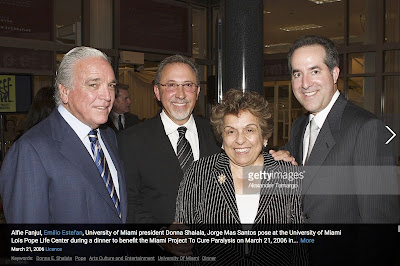
Shalala served a distinguished term as University of Miami president. Earlier, she was Secretary of Health and Human Services in the Clinton WH and a friend of both Bill and Hillary. Her campaign finance plan inevitably includes Clintons' Florida campaign contributors like Big Sugar billionaire Alfie Fanjul -- a board member and major donor to the University of Miami while Shalala was president.

Jose Javier Rodriguez is a leader in a Democratic legislative delegation where leadership is rare as hen's teeth. For example, his support for water treatment and storage marshes in the Everglades in 2017 challenged Big Sugar's control of Florida's political order.


Everglades restoration today is a work-around to maintain the privileges and prerogatives of Big Sugar. Hardened problems in Everglades restoration were created on Bill Clinton's watch.

In 2000 Clinton signed into law the Comprehensive Everglades Restoration Plan which originally cost $6.7 billion (now, at least three times that much) and pivoted around the false flag of technological fixes that many environmentalists knew at the time could not pan out. (Aquifer storage and recovery wells were the false flag; a placeholder in CERP instead of acquiring large parcels of sugar lands to clean up the industry's massive pollution. These pollution costs are primarily paid for, by the public.)

Ironically, in the early 1990's Congresswoman Ileana Ros-Lehtinen's husband -- Dexter -- successfully prosecuted Florida's refusal to protect water quality in the Everglades. While U.S. Attorney in South Florida, Lehtinen defeated the state in federal court (cf. Judge William Hoeveler) but was bitterly disappointed when Clinton allowed the state of Florida off the hook, seizing defeat from the jaws of victory, with a settlement agreement that could not fix the problem of Big Sugar's pollution of the Everglades.

Fast forward, nearly twenty years.

JJR, a Harvard-educated Cuban American Democrat with a bright future in politics, worked during the 2017 legislative session in Tallahassee to shore up the key initiative of Republican senate president Joe Negron who called for the addition of 60,000 acres of land, including centrally-located parcels owned by the Fanjuls, to fix "once and for all" the fatal flaws in South Florida water management infrastructure that turned so much publicly-owned waterways into toxic sewers. (There are about 600,000 acres of industrially grown sugarcane in the Everglades Agricultural Area, around the rim and south of Lake Okeechobee.)

Big Sugar, through massive lobbying in Tallahassee, deftly turned the senate president's bill, triggered by need to solve massive pollution of waterways in his Stuart district, to its own advantage. Negron, who recently announced his plan to retire from the senate, was disappointed at the absence of Democratic support beyond JJR, and it was the failure of Democrats to support additional land purchases that allowed his bill to morph into Big Sugar's Trojan Horse. That Trojan Horse was signed into law by Gov. Rick Scott a year ago and is now headed for Congress, after the stamp of approval by the legislature last week of the plan by the South Florida Water Management District shaped under tightly managed conditions to favor the sugar industry. Meanwhile, a companion bill to benefit Everglades Agricultural Area sugar farmers is speeding through the legislature, thanks to a novice senate Democrat, Lauren Book.

Where does Donna Shalala fit into this narrative? Hard to say, but an early indicator would be to follow Friends of Bill who are financially supporting her campaign.

NOTE: As former leader of Sierra Club and now of Friends of the Everglades, the Miami-Based conservation group founded by Marjory Stoneman Douglas, I opposed the plan to restore the Everglades in the late 1990's that failed to include adequate acreage to store and cleanse Big Sugar's pollution. I strongly supported the ballot referenda in 1994 to tax Big Sugar and to force Big Sugar to clean up its pollution. The state legislature has failed to enact the provision of state law, created by that election, to hold Big Sugar primarily responsible for its pollution and the costs of cleaning up its destruction of water quality in outstanding Florida waters and public lands including Everglades National Park. I have written extensively about these issues, for many years, on this blog, for newspapers, and for online forums. As an individual citizen, I support Jose Javier Rodriguez for Congress.

Tuesday, November 21, 2017

More, from the William M. Hoeveler archive ... by gimleteye

Judge: Corps failed Glades
The U.S. Army Corps of Engineers bent the rules to issue mining permits for the Lake Belt, a federal judge finds.

CRAIG PITTMAN and MATTHEW WAITE
Published March 24, 2006


A federal judge ruled this week that the U.S. Army Corps of Engineers failed to protect the environment when it approved permits allowing limestone miners to blast to bits more than 5,000 acres of wetlands in the Everglades.

In a scathing, 186-page decision issued Wednesday, Senior U.S. District Judge William Hoeveler said the corps rushed its decision, ignored science, shut out the public and failed to consider less-damaging alternatives.

Hoeveler found that corps officials acted from the start as if the mining permits would be approved. That "sense of inevitability," he wrote, resulted in the corps bending the rules to give the miners preference over the public interest.

Monday, November 20, 2017

Federal Justice William M. Hoeveler ... by gimleteye

I never met Judge William M. Hoeveler, who passed away last week at age 95, but our lives intersected over decades of concern for the fate of America's Everglades.

Judge Hoeveler served as a judge on the US Southern District Court. His rulings occupy a special place in my heart and in my files.

To know how much heartbreak and indignation is warranted by the conduct of polluters like Big Sugar or rock miners -- who have used our Everglades as their sacrifice zones -- you would have to read through Judge Hoeveler's rulings and in particular the footnotes where he stuck his most trenchant observations.

Conservatives didn't like Hoeveler because they fundamentally disagree that protecting the environment from harm involves a federal role. Hoeveler, to them, represented a "liberal" point of view -- the common good as protected by federal law -- and they fought him at every turn, supported by their proxies in the appellate court.

That's not what Judge Hoeveler represented to conservationists who believe the federal courts are the last bulwark against polluters' determination to sow chaos in public processes meant to confer order on the relationship between industry profits and clean water for all.

This week I will post some of the Hoeveler file, in memory of a truly significant life.


Hoeveler's only bias is for the Everglades
Palm Beach Post Editorial
Monday, June 9, 2003


Sugar growers -- who showed their power by ramming through a law that delays Everglades cleanup for 10 years -- already own Florida's Legislature and Gov. Bush. Now, the industry wants to "get" the judge who has protected the fragile ecosystem for more than a decade.

The growers launched a two-front battle against U.S. District Judge William Hoeveler last week, claiming he should be removed from supervising the Everglades restoration because he is biased against them. Filing in Miami and in Atlanta, the state's biggest sugar companies cited Judge Hoeveler's recent rulings and comments to reporters as reasons he should be removed. The judge said the new Everglades law is "defective," criticized the South Florida Water Management District, the Legislature and Gov. Bush's advisers, and told a St. Petersburg Times reporter he no longer trusts Gov. Bush. Comments he made to the press echo those he made in open court.

The industry's contentions lack merit. Judge Hoeveler's comments don't compare to interviews outside the courtroom that resulted in another judge being removed from the Microsoft antitrust case. A final judgment hadn't been made in that case, which still was in trial.

In contrast, the Everglades lawsuit between the state and the federal government was settled in 1992, when Florida agreed to an order that set a 2006 deadline for reducing phosphorus pollution in the Everglades to 10 parts per billion. Judge Hoeveler is enforcing that order -- an order threatened by a law the sugar industry wrote and railroaded through the Legislature with Gov. Bush's blessing. The law extends the pollution cleanup deadline to 2016, opens the pollution limit to dispute and shifts payment for the cleanup from the sugar industry to state taxpayers.

The law also dims Florida's chances to win the federal money needed for the $8.4 billion state-federal Comprehensive Everglades Restoration Plan. Convincing Congress to spend federal money is a tough sell after the state has extended the cleanup deadline and weakened pollution standards.

The industry's real beef is Judge Hoeveler's plan to appoint a special master, a supervisor who would closely scrutinize cleanup details. The growers' pressure got him to postpone a hearing Tuesday when he was set to do that, but he still should. He has several outstanding candidates to consider. His best choice would be a man like himself: honest, honorable, and an unwavering advocate for the Everglades.

Judge William Hoeveler's Passing. By Geniusofdespair


Judge Hoeveler....long time ago - 1981

A Federal Judge in Miami Dade County, Judge William Hoeveler, has passed.

I wrote about him December 3rd 2006:
Last night at a dinner party I was asked whether there was anyone I admired. I mentioned Supreme Court Justice Thurgood Marshall. I thought again about it, do I have a more current hero? One living perhaps.

I now see a new hero emerge: Federal Judge William Hoeveler. Why do I keep picking Federal Judges as my heroes? Maybe it is because they can be purer of heart. They don’t have to worry about who butters their bread and what is best for the economy. They can figure out what is wrong and right based on truth. I have been in Judge Hoeveler’s Court Room. He is a towering man. A giant among men. I wish everyone could have such a hero.
We wrote many times about Judge Hoeveler. A sample of Judge Hoeveler's writing follows:

UNITED STATES DISTRICT COURT
SOUTHERN DISTRICT OF FLORIDA
CASE NO.: 88-1886-CIV-HOEVELER

UNITED STATES OF AMERICA, ET AL., v. SOUTH FLORIDA WATER MANAGEMENT, ET AL.
ORDER

THIS CAUSE comes before the Court upon a hearing held on May 2, 2003 called by this Court to address state legislation concerning the Everglades restoration efforts which, as of the date of this Order, the bill in question had not yet been signed by the Governor into law. The Court now feels compelled to comment on the present situation, and take action, as described below.

During the hearing, the state parties repeatedly reassured this Court that the new state legislation, should it become law, will have no effect on the hard-won agreement reached by the parties more than a decade ago, and entered by this Court as a Consent Decree. To be clear, I wish to reiterate in the strongest possible terms that insofar as the new legislation, proves inconsistent with the Decree, the parties' obligations as yet forth in the Decree remain unaltered. The agreement embodied in that Decree remains binding upon the parties, and I intend to enforce it as it currently reads, unqualified.

This Court does not yet have cause to attempt to apply the legislation, and I sincerely hope I am never obliged to do so, for the bill is clearly defective in many respects. The loose language it employs in describing compliance with its own mandates, such as ""maximum extent practicable," robs it of meaning or binding effect. It opens the door to ten or more extra years with no showing that such a lengthy extension is necessary.

While I am deeply troubled by the content of the bill, I am dismayed by the process that led to its passage. The bill was moved quickly through the legislative process, reportedly at the behest of more then forty lobbyists for the sugar industry. There simply is no acceptable explanation for the speed by which this was accomplished, given the fact that the deadlines remain three and a half years off and given the State's assurances much of the cleanup project is proceeding on track. The important issues addressed, namely, the plan for funding and completing the restoration project, warranted serious consideration by Florida's elected representatives.

Moreover, the sponsors of the bill should have allowed time to consider input from the broad range of interests impacted. Yet the treatment of the bill seemed calculated to avoid federal participation or public scrutiny.

I am also concerned about the effect this turn of events will have on the partnership between the federal and state governments. Last tine we met, in October, the presentations her the United States and the state parties suggested a spirit of successful collaboration and shared optimism. The presentation by counsel for the United States at last week's hearing was cautious, to say the least. In a carefully worded statement, counsel for the United States described the bill as "Indeterminate" and "Puzzling." I agree.

I share the federal government's concerns that the state's commitment has been attenuated. And now, it is my understanding that the Governor intends to sign the bill. Apparently, he has been misled by persons who do not have the best interests of the Everglades at heart. It Is my fervent hope that he has the opportunity to compare the bill with the one it would replace, the Everglades Forever Act, and consider whether the derogation of its mandates and deadlines is necessary, or wise.

I and the parties have spent several years laboring over this process, during which I have heard from the best scientists on the progress of the Everglades restoration. Until now, most of the experts, with some exceptions, were satisfied that the work would be completed by December 31, 2006. While there was some caution expressed about that date, the hope was that we would make it. If not, I would think that additional time needed would not be great. Now, the proponents of the new Act talk about ten years, or more.

Because I fear the state's support has been withdrawn, I have decided to take action. Having delayed resolution of this issue some time now, I have decided to appoint a Special Master in this case, as I am convinced that further oversight over the administration of the Decree is necessary. I do not intend to entertain further discussion as to whether a Special Master is warranted, but I recognize the necessity of clearly defining the scope of the position's authority, and identifying the most appropriate candidate. When this issue arose previously, several parties requested additional time "to brief the issues raised, including authority and costs. To that end, I invite the parties to do so, and come prepared on June 10 with additional proposals for candidates.

In conclusion, as far as the federal lands are concerned, it is this Court's position that the new legislation, if passed by the Governor, will have no effect. The hearing set for June 10 will proceed as scheduled, and will address the parties' progress toward meeting the Consent Decree's interim deadlines, which are imminent. At that time, I will also hear argument on the proper role for the Special Master and the parties' positions on the most appropriate candidates.
In the words of Theodore Roosevelt, "Conservation means development as much as it does protection, I recognize the right and duty of this generation to develop and use the natural resources of our land, but I do recognize the right to waste them or to rob, by wasteful use, the generations that come after us."

Tuesday, November 14, 2017

What I didn't say ... by gimleteye

Sunday by the Biscayne Bay Nature Center, a small crowd gathered to remember the life of Juanita Greene, a former newspaper reporter for the Miami Herald and, after she retired, a leader of a small local environmental group, Friends of the Everglades. It was unseasonably warm, as we are getting used to.

In the patio area, groups clustered around cement tables and curved benches shaded overhead from the sun and heat. The average age, seventy.

At the high end, Lloyd Miller and his wife, Dottie. Lloyd is 96. Still sharp and remembers the days he, Juanita and a brave band fought against industrial development and a port terminal in the middle of what they helped create: a national monument then a national park in Biscayne Bay. At the youthful range, Juanita's granddaughter who is now an environmental consultant.

In the mid 00's, Juanita recruited me to the board Friends, founded by Marjory Stoneman Douglas during the battle to stop a major commercial airport from being built in the middle of the Everglades. By the time I joined the board, I had already spent fifteen years as an activist and writer for the environment; for Florida Bay and the Everglades.

I took my speaking task on Sunday as a matter of recounting some of Juanita's accomplishments. For example, a federal Clean Water Act lawsuit she helped to shepherd into the courts resulted in a major victory in 2010, a ruling by Judge Alan S. Gold who sharply rebuked the EPA and State of Florida for failing its obligations to protect the Everglades. A few years later, Gold's judgment triggered a commitment by the state of Florida to spend nearly $900 million to reverse Big Sugar's pollution of the Everglades.

I noted that Florida Governor Rick Scott made this announcement as though it was his achievement and not a major loss in federal court. I explained the state of Florida -- during the Jeb Bush years -- had to be dragged kicking to court to do what it had promised in an even earlier federal state settlement, adjudicated by Judge William Hoeveler in the 1990's. I also pointed out that Gov. Scott never acknowledged either Friends of the Everglades or the co-plaintiff, the Miccosukee Tribe of Indians who brought the case, nor had his omission been acknowledged by the press.

One by one, retired Miami Herald employees also took turns eulogizing their late colleague. Each brought to the microphone a wistfulness of a disappeared newsroom, of a shared community that joyed in capturing the facts of life in the Miami melting pot every day.

Martha Musgrove spoke. She is a former associate editor of the newspaper and during her career at the Herald as sharp an observer on the editorial page of the Everglades morass as ever graced the reading public.

Here is what I didn't say and would like to say now.

30, 40, 50 years ago, the Miami Herald was not a friend of the Everglades or the environment.

There was never a golden age when it came to telling the facts about special interests -- whether defined as Big Development, bankers, or Big Sugar -- who turned Florida's natural heritage into sacrifice zones for their profits.

Marjory Stoneman Douglas was the daughter of a Miami newspaper publisher and a reporter herself in the early part of the 20th century whose conversion to advocacy to the Everglades was not only heart-felt but also a mea culpa for the profits wrung from advertisers that kept a version of reality in front of daily subscribers.

In the 1970's, Juanita Greene struggled from inside the newsroom to get the Knight brothers, John and James, to put column inches on Biscayne Bay in front of readers. They were indifferent as their advertisers went about the job of building condos on the shoreline and carving "affordable" housing into new suburbs and out of Everglades wetlands. Same, for their successors: no one got a performance bonus or a pension for saving the environment.

Juanita Greene loved the Everglades and she knew very well that the decline of America's most unique wetlands ecosystem was a reflection of the corrosive effects of greed, money and power here, in Tallahassee, and in Washington DC. She also knew the Miami Herald had done a poor job explaining the high stakes or diving into the toxic culture that allowed blind eyes to be turned to the destruction of the Everglades. She became an activist, proudly, in a town whose newspaper never valued or promoted activism because it ran against commercial interests and the public good as defined by the Chamber of Commerce or Big Sugar in the shadows.

But running down the media or the Miami Herald is not the point I want to make. I have another point to make: about the public mistrust of the media as fomented by the radical right.

The digital age and internet-based sources of "news" wreaked havoc on journalism in general and print newspapers in particular. The threats to fact and truth are mainly through disinformation tactics embraced by the radical right. The very people, led by President Trump, who decry "FAKE NEWS" are the ones hell-bent on tearing down the laws and institutions that protect our democracy.

Juanita Greene was representative of the small band who gathered last Sunday -- environmentalists, former newspaper reporters and editors, fishermen, scientists, friends and family -- who struggled to get fact of Everglades decline out of government agencies and into the hands of elected officials or the courts because laws were being violated and unenforced. Newspapers like the Miami Herald -- and certainly not television -- were part and parcel of the problem, but pale in comparison to today's conflagration.

Today, the United States is literally the only non-signer of a global agreement to fight climate change. Governor Rick Scott, a climate change denier. Senator Marco Rubio, a climate change denier. We have actors who have so hammered the idea that government is "the problem", we are all shrouded in darkness. Malignant media empires like Rupert Murdoch's Fox News are mightily profiting from discord, fear and division. And on the internet, readers are herded and silo'd by hostile foreign powers without any kind of balance or reckoning and supported by corporations using first amendment rights as their fig leaf.

Defenders of the environment see these mechanics clearly because the polluters have the upper hand in steering democracy toward their toxic goal: to make as much money as fast as they can before sea levels rise. In the Trump administration, a combination of unqualified judicial appointments to the federal bench and agency disintegration, like that of the EPA under administrator Scott Pruitt, are doing vast damage to the intent of environmental protection.

Juanita Greene fought to get her reports of Biscayne Bay -- a jewel -- into the pages of the Miami Herald and it wasn't enough. She faced the bad news and still picked up the pen and sword, every day. We need more soldiers like Juanita, and that is a fact.

The Case for Buying the Everglades Agricultural Area by Juanita Greene, 1999 by Alan Farago on Scribd


Saturday, May 13, 2017

Florida AG Pam Bondi Helming Effort On Behalf Of Big Sugar To Undo 30 Years Of Federal Environmental Law Protecting The Everglades ... by gimleteye

After its successful legislative session in Tallahassee, Big Sugar is deploying a novel attack in Washington against federal pollution rules settled through decades of federal litigation by environmentalists in a case once overseen by Judge William Hoeveler.

Once upon a time, the Florida's governor (the late Lawton Chiles) capitulated to evidence that its non-existent enforcement against Big Sugar polluters caused the Everglades ecosystem to crash. Dexter Lehtinen, the US Attorney in Miami in the late 80's, fought on behalf of the Everglades against Florida's institutional managers: the state's wealthiest and most powerful campaign contributors US Sugar and Florida Crystals, owned by the Fanjul billionaires.

Lehtinen won, and ever since the resulting federal state settlement agreement in the early 1990's, Big Sugar has been looking for cracks and openings to increase its profits by reducing the impacts of regulation. Its ceaseless enterprise is fueled by hundreds of millions in profits extracted through favorable subsidies embedded in the federal Farm Bill, that ensures the cost of sugar paid by consumers is nearly twice the world market price.

Sugar is wildly profitable, and the industry carefully sprinkles a portion of its gains throughout the political universe; from county commission races, to the state legislature, Congress, and the executive branch.

Bit by bit, year by year, Big Sugar has pushed its case that the industry is self-regulating its pollution through toxic farm run-off, using various schemes (like mixing averages to dilute end of pipe phosphorous measurements) to assert its compliance.

In this session of the Florida legislature, Big Sugar succeeded in locking down further privileges in return for minimal concessions.

Now the industry's attention turns to a case so old that William Hoeveler in no longer involved. Miami federal judge Federico Moreno has been supervising the state federal consent agreement for years. In February the Miami Herald reported:

A quarter century after the state promised to clean up polluted farm water fouling the Everglades in a historic federal court order, water managers say its time to end the judicial oversight.

In an email earlier this month, an attorney for the South Florida Water Management District asked the U.S. Department of Justice to agree to terminate a “consent order” struck to end a bitter legal battle over dirty water flowing off sugarcane fields and into Everglades National Park and the Loxahatchee National Wildlife Refuge. The district, which has repeatedly pushed to end the judicial oversight, argues that with water in 90 percent of the Everglades now meeting targets and construction on schedule for clean-up projects, the order is no longer needed.

“This protracted litigation … stands today as an antiquated and inequitable vestige of a bygone era,” attorney James Nutt wrote in a draft motion he forwarded to DOJ attorneys Feb. 10. “It is the right time to acknowledge the State parties’ remarkable achievements.”

In fact, fixing the Everglades is so far from over that certainty has been pushed well into the late 2020's. It will take more than a decade for any assurances to emerge that water quality standards can be met. Everglades scientists, meanwhile, are convinced that the state has not done enough to secure the future of dying River of Grass. That did not deter Florida legislators from pressing forward with a new bill, recently signed into law by Gov. Scott, largely written and approved by Big Sugar.

At the same time, the chaos of the most incompetent presidency in U.S. history has opened the way for Trump insiders -- Gov. Rick Scott and State AG Pam Bondi -- to wage the argument directly and behind closed doors with sympathetic principals (ie. US Attorney General Jeff Sessions and EPA Administrator Scott Pruitt) that the federal government ought to get out of the business of environmental regulation in Florida's Everglades.

In 2018 Scott will run for the US Senate seat held by Everglades friend, Bill Nelson. Big Sugar's designated successor to Scott, Agriculture Secretary Adam Putnam, is preparing to compete to be the next GOP candidate for governor of Florida. Bondi, who earned Trump's support by closing her eyes to the Trump University scandal during the presidential campaign, is the logical person to helm Big Sugar's effort to undo the federal consent decree protecting the Everglades.

Tuesday, December 29, 2015

Jeb Bush Fail: The Everglades ... by gimleteye

I wrote the following for a Sierra Club Florida publication in May, 2003 as Jeb Bush was blowing up the federal state partnership to restore the Everglades. It happened a dozen years ago, when Jeb Bush was governor.

Jeb's political character flaw is a deep one; forcing science, fact and policy to fit predetermined outcomes. At the time, he said, "I don't need the permission of environmentalists to save the Everglades", but what he did in 2003 set back Everglades restoration for a decade at least.

Jeb was doing the bidding of Big Sugar, as disclosed in the recent New Yorker investigative report by Dexter Filkins. The New Yorker cites the outraged response of the federal judge who at the time had the longest and most in depth experience with Everglades related lawsuits: Judge William Hoveler. His remarks are printed entirely, below.

It is ironic that Big Sugar -- such a reliable supporter of Jeb in the past -- seems to be squarely in Marco Rubio's corner during this GOP presidential primary. But first, my commentary at the time for Sierra Club:
"A massive campaign by citizens to urge the governor to use his veto pen may or may not succeed by the time this article is published. 
Florida’s Everglades are a national treasure, ruined by the best intentions of public policy and the worst of human impulses; greed. 
What we treasure in the Everglades is the grand and the simple at once; the majestic panoramas framed by the sure knowledge that what we can see exists through the force of simple gravity; the slightest and most imperceptible variations of elevation that allow trillions of gallons of fresh water to flow seasonally, each year, in a slow arc from the waters of Lake Okeechobee through the tree islands and sawgrass prairies, through the uplands, rivers, and sloughs, into Florida Bay. 
The grand and simple of the Everglades is a natural poetry we follow with our senses and can lead us to experience an exalted sense of life. Simple gravity and clean, fresh water—nurturing the periphyton mats that comprise the bottom layer of the food chain—finds its polar opposite in political forces, driven by money and wealth, that have twisted restoration of the Everglades into a tangle of conflicting policies, regulations, and jurisdictions. 
It is not for want of trying. For decades, conservationists have advocated public policies to modify land use practices, including the proliferation of unsustainable agriculture and development in wetlands, and restore the simple force of gravity to the Everglades.
The Micosukee Tribe, an independent nation living in the Everglades, have passionately and eloquently advocated for water quality, investing considerable resources and expertise in fighting the worst impulses of government to protect polluters and campaign contributors.

Friday, April 17, 2015

Florida: where anything protecting the public interest and inhibiting private profit is for sale … by gimleteye

As a Sierra Club leader in the 1990's and early 2000's, I was involved in the federal lawsuit -- ultimately won by environmentalists -- against the US Army Corps of Engineers for recklessly allowing the expansion of rock mining in West Miami Dade, adjacent to the historic Everglades and drinking water well fields serving more than 2.2 million residents.

Herald columnist Fred Grimm offers a compelling narrative, why the actions of two Republican Miami Dade state legislators from Hialeah -- Manny Diaz Jr. and Rene Garcia -- deserve even harsher condemnation.

Since Gov. Rick Scott appears to have shut off any dialogue with citizens and is only listening to special interests, it seems likely that the rock mining industry will get a free pass just like every other special interest in Tallahassee.

It used to be that everything in Florida was for sale that wasn't locked down. These days everything is for sale even if it is locked down. "Rock mining mitigates risks with political influence" is just a more polite way of saying so.

Fred Grimm: Rock mining mitigates risks with political influence
FRED GRIMM
FGRIMM@MIAMIHERALD.COM
04/15/2015 6:55 PM 04/16/2015 9:23 AM

The risks to our water and environment seem self evident. At least to those of us without a sweet and snuggly relationship with Miami-Dade’s rock-mining industry.

Situated in uncomfortably close proximity to both valuable wetlands and the wellfield that provides 40 percent of the county’s potable water, rock miners are blasting and hacking and hauling out prodigious quantities of limestone. Half the limestone aggregate used to build Florida’s roads, bridges, buildings and other construction is trucked out of that 77.5-square-mile area in the northwest corner of the county known as the lake belt region.

Digging that much rock out of a sensitive area comes with such calamitous potential that, over the years, the industry agreed to a series of mitigation fees to stave off government intervention.

Sunday, January 11, 2015

Join in Donating Contents for Book in Honor of Federal Judge William Hoeveler. By Geniusofdespair

Federal Judge William Hoeveler
Norman Moscowitz said:

Dear Colleague:

A number of us have been sharing recollections of our appearances before Judge Hoeveler and our encounters with him over the years. It became clear to us that such stories from the members of our legal community "could fill a book," and so, with the cooperation of Judge Hoeveler's staff, that is precisely what we would like to do. We are preparing a book of such reminiscences which we hope and expect the Judge will enjoy, and we invite you to submit a story for inclusion in this book.

At some time in early 2015, St. Thomas University School of Law will be hosting an event to honor Judge Hoeveler and to announce that its Law Library has been selected as the repository for his trial notebooks, correspondence, and other judicial memorabilia. We are pleased to announce that St. Thomas has agreed to publish this book and to present it to Judge Hoeveler at that ceremony. (It is intended to be a surprise to the Judge.) After that, copies will be made available to the public. As you may know, The Florida Bar annually awards the William M. Hoeveler Judicial Professionalism Award to an outstanding jurist in Florida, and copies of this book will be presented to the Hoeveler Award recipients in future years.

We hope to include in this book stories about Judge Hoeveler, both from the time when he was practicing as a lawyer and during his 37 years of service on the bench. We are not looking for tributes or general praise, but rather anecdotes and "war stories" which by their narratives, and not by their adjectives, will say something about the kind of lawyer, jurist and person he is. These stories may be serious or funny, they may relate to personal encounters or things which took place in the courtroom during routine or more significant matters. Whether submissions emphasize his grace, patience, diligence, kindness or sense of humor, we believe that the collection as a whole will say something important about him and we hope that it will be a fitting tribute to his legendary career as a lawyer and trial judge.

Judge Hoeveler in 1990 (Random Pixels)

Your submission should be double-spaced in Word, in Courier New, 12 point, and preferably no longer than a single page. Please identify yourself by name and affiliation, and give context for your submission. Please send it to: HOEVELERSTORIES@gmail.com HOEVELERSTORIES@gmail.com. Professor Gary Kravitz at St. Thomas and Barbara Junge, Judge Hoeveler's former law clerk, will collect the stories and prepare them for publication. Also, in your email message please identify the specific character trait(s) your story highlights, e.g., grace, patience, diligence, kindness, sense of humor, integrity, faith, hard-working, or others, as this will help us assemble the stories in the collection.

Please send your submission no later than January 20, 2015. Unlike Judge Hoeveler, we will not be liberal in granting extensions, although for a good excuse and a good submission exceptions will be made. Please forward this solicitation to friends and colleagues who may not have received it directly.

Genius: Get to know him...  I wrote about him being my hero December 3, 2006 (such a Groupie...)

(Judge Hoevler on video - see him in action)

Wednesday, September 18, 2013

Fox News affiliate Sunshine State News papers shifts attention away from Big Sugar polluters ... by gimleteye

Sunshine State News is like a state affiliate of Fox News. The paper has tried to calm the waters of public opinion, pouring from coastal communities and voters sick of toxic water flooding into the estuaries from Lake Okeechobee. While the solution to Lake Okeechobee pollution is to treat all sources of pollution around the lake at their sources, the obvious "fix" -- to acquire vastly more acres of land around the lake for water treatment puts the focus exactly where the profits of Florida's most powerful campaign contributors are located: the Everglades Agricultural Area owned by Big Sugar billionaires.

In the mid-1990's, when the Lawton Chiles initiative called the Governor's Commission for A Sustainable South Florida called together a blue ribbon panel to move state Everglades' policies beyond the litigation that had been settled in the courtroom of Judge William Hoeveler, the experts and policy advisors helped focus public attention -- and later, Congress, federal agencies and the US Army Corps of Engineers -- on how to fix pollution, including Lake Okeechobee, without taking land through eminent domain in sugarcane production south of the lake.

The "fix" was a technology that proposed substituting underground storage "reservoirs" to stack unwanted water in huge quantities called ASR, or, aquifer storage and recovery. To most scientists and environmentalists, ASR was never more than a trick. Like pulling a rabbit out of a hat. Nevertheless, nearly twenty years ago it was clear -- abundantly clear -- that decision makers in Florida were ready to adopt a technology that was barely feasible but scalable, a feat of engineering that would scatter profits and campaign contributions out of the application of industry, a trick that would avoid the political problem of a land war with Big Sugar billionaires.

A true history of this era would explore the investments made by Big Sugar in other diversionary tactics. Campaign money flowed during these decades from Big Sugar into virtually every initiative to repel and obstruct government regulations; from the Sagebrush Rebellion that sought to mire the Florida Keys to development schemes at the edges of the Everglades. Environmental groups, during this time, were very successful in elevating the Everglades as a status symbol for a nation concerned about clean air and water but largely powerless to influence the political outcomes; especially the one that depended on an untried technology -- in Florida -- to obviate the need to confront the inadequate volume of surface storage to treat all the pollution fouling Florida's rivers, bays and estuaries.

Due to an extraordinarily wet year, Florida's estuaries attached by canals and river waterways to Lake Okeechobee are back in focus. There ought to be a law, but there is none. There is none, because state government and Florida legislators are all poised to shift the costs of pollution to taxpayers and benefit polluters. And because there is none, now conservative opinion is shifting back to that old war horse, that lame dog: aquifer storage and recovery.

One of Big Sugar's megaphones at Sunshine State News, opinion writer Nancy Smith, picks up the aquifer storage and recovery theme and shakes it like a wet rag. "(Water management) officials say that after dealing with damaging freshwater discharges from Lake Okeechobee, what should catch everybody's attention is the technology itself, making it possible to store more water than a typical above-ground reservoir." Smith might have examined the copious evidence that the costs of ASR can overwhelm any possible benefits. Like the 2003 report from the USGS, "As alternative approaches to increasing water supply and availability in southern California, such as injecting and storing treated water underground are explored, water managers need to be aware of potential impacts on water quality, according to a new study by the U.S. Geological Survey (USGS). The USGS study of a test site in the Antelope Valley of southern California, near Lancaster, found that when treated surface water was used to recharge the aquifer, by-products of the water disinfection process accumulated in the aquifer. These by products include trihalomethanes (THMs), which have been listed as carcinogenic by U.S. Environmental Protection Agency (EPA)."

The premise of aquifer storage and recovery is that you can use wells drilled through the aquifer to lower geological layers to "store" water when it is not needed. Later, it can be withdrawn, like nickels in a piggy bank, when it is needed. The problem with ASR is that the water that is sent underground through multi-million dollar wells is dirty and when it is retrieved by industrial pumps it is dirtier still; carrying trace chemicals that can be even more deadly to people and to wildlife. So why are water managers playing the ASR card, through Sunshine State News? Because they have been urged in that direction, to deflect attention from Big Sugar.

Big Sugar has always been extraordinarily skillful in forging alliances. It used the Farm Bill, for instance, to tie the price support for cane sugar to corn fructose and beet sugar -- ensuring an enduring political alliance with members of Congress from the farm belt and Rocky Mountain states. In cultivating its relationships with well drillers and engineering firms, Big Sugar has tapped into another powerful political constituency in Florida.

So when you read about ASR as a possible solution to the Lake Okeechobee crisis, your Bullshit Meter should be registered, on high. Read on:

Friday, September 13, 2013

In Remembrance, Clay Shaw ... by gimleteye

(Note: as president of the board of Friends of the Everglades, and previously a state leader for Sierra Club, I write the following with direct knowledge of the circumstances of a critical portion of Clay Shaw's legacy. I never exchanged more than pleasantries with Congressman Shaw but observed the outcomes described below.)

In obituaries, the late Congressman Clay Shaw has been noted as a moderate Republican and champion of the Everglades. There are no scores settled from the grave, and, as often said; what emerges as history often depends on who gets the last word. So in the interest of history and scores – or at least counting them – how Clay Shaw was a friend of the Everglades deserves a closer reading.

In June 2001, President George W. Bush visited the Everglades. Congressman Shaw was in the presidential entourage. According to a New York Times report at the time, "Mindful, perhaps, that the president was not seen as having lavished sufficient praise on Representative Shaw at the Everglades event, speakers went out of their way to pay homage to him here. Al Cardenas, the state Republican chairman, singled out Mr. Shaw for "special recognition" as "someone who fights so hard for Florida every day in Congress." ("Florida GOP sees Bush visit as latest slight", NYT, 6/14/2001)

The reputation of the Everglades as a political swamp could not have been lost on any of the participants. Democrats, including Al Gore, had been badly boxed in by the political weight of Florida developers and Big Sugar. Jeb Bush, who gained his first elected office as governor of Florida in 1998, had substantially benefited from the builder lobby and the sugar billionaires. Scarcely six months earlier, on the same day the US Supreme Court decided in favor of George W. Bush, Jeb signed with President Bill Clinton in the Rose Garden the Comprehensive Everglades Restoration Bill.

Democrats in Congress, in Florida, and the Clinton White House wanted a bill – any bill – to settle decades of litigation. Republicans wanted a bill that would keep all the economic stakeholders and interests who depended on exploiting the Everglades – for cheap water, for limestone, for sugar – in play. While the distinction is actually blurred (only a Democratic sugar billionaire had the weight to get a phone call to President Clinton during one of his Oval Office trysts), Clay Shaw was one of the very few Republicans in Congress who understood and despaired the corrupting influence of the sugar subsidy in the Farm Bill. As such, while still a member of Congress he stood astride the achievement of federal legislation called CERP as a watchdog.

As a former mayor of Fort Lauderdale, Shaw's political career spanned the growth of urban Florida from small segregationist towns to sprawling metropolis and suburbs marching to the Everglades, filled with millions of new voters whose weak connections to a splendid wilderness just on the other side of the Florida Turnpike represented new political opportunities for the exploiters.

The Everglades restoration bill signed by Governor Jeb Bush on December 12, 2000 contained many trap doors, but two unavoidable facts of law that Bush’s Big Sugar supporters were determined to alter. The first had to do with the pollution standard for phosphorous: 10 parts per billion. The second had to do with a 2006 deadline for cleaning up its pollution. Both facts were established by a 1994 settlement agreement between two Democratic administrations as the result of years of federal litigation.

In 1993, at the very place in Everglades National Park where in 2001 President George W. Bush affirmed his commitment to America’s Everglades, a Democratic White House and the late governor of Florida Lawton Chiles, celebrated peace and progress on of the nation’s most enduring environmental challenges.

Governor Jeb Bush had different ideas. In 1994 Gov. Chiles defeated Jeb as a well-connected, first-time political candidate. Through his Foundation for Florida's Future, Jeb tinkered with conservative notions to unleash the power of profit as motivation for public good against "command and control environmental regulation". For industry -- the sugar industry --, those ideas mainly related to shifting the costs of pollution, or, cooking the books at the expense of the Everglades and the public.

For example, the biggest cost component of the original $7.8 billion price tag for CERP was a technology that was fiercely opposed by Sierra Club called aquifer storage and recovery (ASR, by acronym). Fully $3 billion of the price tag was aimed toward sinking 300 wells to store “excess” water in the hydrological equivalent of political sausage grinders. These wells, it was theorized, would replace the need for taking hundreds of thousands of acres out of sugar production. (The single federal agency qualified to judge the utility of applying ASR wells in Florida, the United States Geological Survey or USGS, was not consulted in the plan's formulation.)

For ASR to work, Governor Bush attempted a significant re-write of Florida water quality law. In April 2001, Sierra Club issued a state-wide alarm: “The Florida Legislature is now considering a law that would eliminate the standards for total coliform and other biological and chemical contaminants in our underground drinking water supply when water is pumped down from the surface. Our drinking water supply, the Florida Aquifer, would become a septic tank.”

The public outcry forced a rare policy retreat (one legislator in Georgia, when she heard of the Florida plan to store contaminated water in drinking water aquifers, trenchantly called the Jeb Bush plan “dumber than dirt”.) Bush was furious with environmentalists and never again acknowledged Sierra Club or its role in the hearts and minds of Florida voters. Nevertheless, ASR remained the “driver” of Everglades restoration plans for years within agencies like the US Army Corps of Engineers and EPA. Its leaders on the ground and in Washington knew better than buck political orthodoxies in Florida.

This was the swamp that Congressman Clay Shaw straddled, as a pragmatist who trusted that the federal court settlement in the Miami courtroom of Judge William Hoeveler a decade earlier, established the facts of pollution by Big Sugar and deadlines to fix the Everglades.

Those were exactly the facts that Big Sugar and its army of lobbyists sought to alter while the ink was still drying on CERP, through the agency of Governor Jeb Bush.

The legal avenue involved mobilizing the Florida legislature to re-write pollution standards for the Everglades without upsetting the 1994 settlement agreement. The effort that materialized scarcely two years after President George W. Bush’s appearance in the Everglades went along the lines of blurring deadlines and a de facto dilution of hard, fast numerical standards for fertilizer runoff.

The opening of this new attack on the Everglades, was rationalized as progress by Gov. Bush. In the 2003 session of the Florida legislature, Big Sugar flooded Tallahassee capitol hallways with its lobbyists. Environmentalists bitterly complained that there were more sugar lobbyists in Tallahassee than state senators: they were right.

"Now the sugar brigade has stormed Tallahassee to try to muck up the Everglades Forever Act, the very cleanup bill that has worked such wonders that Big Sugar pushed it through the Florida Legislature nearly a decade ago. In addition to moving the cleanup deadline back from 2006 to 2026, the industry's bill would have weakened the phosphorus standard from 10 to 15 ppb, prevented the state from converting any more sugar fields into artificial marshes, and basically eliminated any threat of enforcement. "An absolute betrayal," says Charles Lee, an Audubon Society lobbyist who has worked on Everglades issues for 30 years." (Sugar Plum, Michael Grunwald, The New Republic, April 24, 2003)

In the spring of 2003, Shaw was chairman of the Florida congressional delegation and point person for federal Everglades funding. Joined by fellow Republican Congressman Porter Goss, Shaw strongly objected to the draft bill supported by Gov. Bush, saying it was "inconsistent" with both the Everglades Forever Act and the 1992 court settlement, "creates significant ambiguity and diminishes the standard" for water quality, would "have negative impacts" on Interior Department resources, "limit the state's ability" to protect the Everglades environment and "does not reflect state intent to fully fund water-quality improvements." Shaw met with the leaders of the Florida legislature and spoke with Governor Bush. (Governor Must Veto Glades Clean Up Bill, Key West Citizen, 4/30/2003)

Bush accused Shaw in the press of being uninformed. (Bush: Sugar bill no Glades Threat, Miami Herald, April 8, 2003) Shaw ratcheted up his response. In a letter to the Florida legislature, Goss and Shaw called the legislation a potential "fatal error". "Only a few years ago, following months of negotiations, a diverse group of stakeholders reached a consensus that ensures the long term protection and habitat of the Everglades... " ("Congressmen warn state about tinkering with Everglades, AP, April 4, 2003)

In the middle of the legislative session, Judge Hoeveler called for a hearing -- at which Congressman Shaw testified -- , cutting through the criticisms leveled by Bush lieutenants like FDEP Secretary David Struhs in lockstep with sugar industry spokesmen who derided environmentalists for being "Chicken Littles" and "crying wolf".

On May 9th, Judge Hoeveler issued an extraordinary order:

UNITED STATES DISTRICT COURT
SOUTHERN DISTRICT OF FLORIDA
CASE NO.: 88-1886-CIV-HOEVELER

UNITED STATES OF AMERICA, ET AL., v. SOUTH FLORIDA WATER MANAGEMENT, ET AL.
ORDER

THIS CAUSE comes before the Court upon a hearing held on May 2, 2003 called by this Court to address state legislation concerning the Everglades restoration efforts which, as of the date of this Order, the bill in question had not yet been signed by the Governor into law. The Court now feels compelled to comment on the present situation, and take action, as described below.

During the hearing, the state parties repeatedly reassured this Court that the new state legislation, should it become law, will have no effect on the hard-won agreement reached by the parties more than a decade ago, and entered by this Court as a Consent Decree. To be clear, I wish to reiterate in the strongest possible terms that insofar as the new legislation, proves inconsistent with the Decree, the parties' obligations as yet forth in the Decree remain unaltered. The agreement embodied in that Decree remains binding upon the parties, and I intend to enforce it as it currently reads, unqualified.

This Court does not yet have cause to attempt to apply the legislation, and I sincerely hope I am never obliged to do so, for the bill is clearly defective in many respects. The loose language it employs in describing compliance with its own mandates, such as ""maximum extent practicable," robs it of meaning or binding effect. It opens the door to ten or more extra years with no showing that such a lengthy extension is necessary.

While I am deeply troubled by the content of the bill, I am dismayed by the process that led to its passage. The bill was moved quickly through the legislative process, reportedly at the behest of more then forty lobbyists for the sugar industry. There simply is no acceptable explanation for the speed by which this was accomplished, given the fact that the deadlines remain three and a half years off and given the State's assurances much of the cleanup project is proceeding on track. The important issues addressed, namely, the plan for funding and completing the restoration project, warranted serious consideration by Florida's elected representatives.

Moreover, the sponsors of the bill should have allowed time to consider input from the broad range of interests impacted. Yet the treatment of the bill seemed calculated to avoid federal participation or public scrutiny.

I am also concerned about the effect this turn of events will have on the partnership between the federal and state governments. Last tine we met, in October, the presentations her the United States and the state parties suggested a spirit of successful collaboration and shared optimism. The presentation by counsel for the United States at last week's hearing was cautious, to say the least. In a carefully worded statement, counsel for the United States described the bill as "Indeterminate" and "Puzzling." I agree.

I share the federal government's concerns that the state's commitment has been attenuated. And now, it is my understanding that the Governor intends to sign the bill. Apparently, he has been misled by persons who do not have the best interests of the Everglades at heart. It Is my fervent hope that he has the opportunity to compare the bill with the one it would replace, the Everglades Forever Act, and consider whether the derogation of its mandates and deadlines is necessary, or wise.

I and the parties have spent several years laboring over this process, during which I have heard from the best scientists on the progress of the Everglades restoration. Until now, most of the experts, with some exceptions, were satisfied that the work would be completed by December 31, 2006. While there was some caution expressed about that date, the hope was that we would make it. If not, I would think that additional time needed would not be great. Now, the proponents of the new Act talk about ten years, or more.

Because I fear the state's support has been withdrawn, I have decided to take action. Having delayed resolution of this issue some time now, I have decided to appoint a Special Master in this case, as I am convinced that further oversight over the administration of the Decree is necessary. I do not intend to entertain further discussion as to whether a Special Master is warranted, but I recognize the necessity of clearly defining the scope of the position's authority, and identifying the most appropriate candidate. When this issue arose previously, several parties requested additional time "to brief the issues raised, including authority and costs. To that end, I invite the parties to do so, and come prepared on June 10 with additional proposals for candidates.

In conclusion, as far as the federal lands are concerned, it is this Court's position that the new legislation, if passed by the Governor, will have no effect. The hearing set for June 10 will proceed as scheduled, and will address the parties' progress toward meeting the Consent Decree's interim deadlines, which are imminent. At that time, I will also hear argument on the proper role for the Special Master and the parties' positions on the most appropriate candidates.

In the words of Theodore Roosevelt, "Conservation means development as much as it does protection, I recognize the right and duty of this generation to develop and use the natural resources of our land, but I do recognize the right to waste them or to rob, by wasteful use, the generations that come after us."

On May 20. 2003 Gov. Jeb Bush signed the Everglades bill into law despite a massive outcry by civic leaders, environmentalists and every newspaper editorial board in the state. For The Palm Beach Post, Sally Swartz acidly observed, "... deluded officials, clueless legislators and a governor who won't admit a mistake intend to "fix" the bad law with a still-secret new one. Sure they will." ("Marketing the Everglades Bill, Palm Beach Post, May 21, 2003)

As Everglades Chair at the time, I penned a statement for Sierra Club: "... We understand that big money and big influence can buy just about anything in the state of Florida, including the redefinition of pollution so that polluters can continue to pollute and shift the cost to ordinary citizens." Sierra Club dubbed the Jeb Bush bill, “The Everglades Whenever Act”. A year later, Friends of the Everglades and the Miccosukee Tribe of Indians filed federal litigation against the US EPA and Florida DEP for failing to abide by the nation’s landmark Clean Water Act.

The controversy over the Jeb Bush/ Big Sugar attempt to change the Everglades Forever Act had deep repercussions. David Struhs, the Bush lieutenant who misrepresented that federal agencies had "approved" the proposed changes, shortly resigned. After objections by Big Sugar, Judge William Hoeveler, one of the most respected members of the federal judiciary, was removed from Everglades litigation that remains the landmark of a storied career. The passage of the 2003 legislation lead to a new Clean Water Act lawsuit by Friends of the Everglades and the Miccosukee Tribe of Indians. In 2013, that litigation finally resulted in a major win for environmentalists and a settlement requiring, ultimately, more than $880 million in water treatment marshes to protect Everglades water quality. Big Sugar and the state of Florida continue to appeal the ruling by Hoeveler's successor in Everglades related litigation, Judge Alan Gold.

In August 2003, Stephen Goldstein for the Fort Lauderdale Sun Sentinel opined on Congressman Clay Shaw's role. ("Don't let deal sour project", Fort Lauderdale Sun Sentinel, August 20, 2003)
"Big Sugar owns Jeb Bush and the Republican-dominated Florida Legislature -- but not U.S. Rep. Clay Shaw. So, when the industry unleashed some 46 lobbyists to get a sweetheart bill passed giving it carte blanche to pollute the Everglades, elected officials of both parties melted. It was politics at its most saccharine in Tallahassee -- but led to one of Shaw's finest hours.

"I never read a worse drafted piece of legislation in my entire life," says the Washington veteran, who ought to know good from bad after representing South Florida for nearly 23 years. He says it was full of "weasel-words," that turned previously negotiated timetables and standards holding Big Sugar accountable for Everglades clean-up into gaping loopholes allowing for the dumping of deadly phosphorous willy-nilly.

"No one will confess to authorship of this bill," Shaw adds, aghast at the machinations of members of his own party. "This legislation puts greater burden on the taxpayer. It's a new tax. It flies in the face of the mandate from the electorate that polluters pay. It's an incredible thing -- one industry's hold on Florida. I would never have believed it."

... He pledges that he'll "never give up on the Everglades"; it's his "passion": "As long as I live and breathe, I'll be devoted to cleaning up and preserving it." The River of Grass is "full of life"; "we've messed it up, but we have no right to change the cycle of life" there. He says he's "been around long enough to know you don't pick up your marbles and go home. You keep moving. The game is never over."

In the Fort Lauderdale Sun Sentinel this week, former Governor Jeb Bush recalled Shaw, "... as being an an ally on Everglades restoration. "Politics doesn't have to be about elbows and knees and mean-spiritedness," Bush said. The record -- on both Jeb Bush and Clay Shaw -- shows otherwise, although Shaw was never mean-spirited.

The 26 year congressman was defeated by a Democrat, Ron Klein, in 2006. Klein benefited from the campaign support of Big Sugar. That year I wrote to a colleague, "I've seen Clay Shaw at work in federal court, defying Jeb Bush on the Everglades and it was a sight to behold. He deserves our gratitude: I can't think of another Republican from Florida who has taken as many real risks as Shaw in defense of the Everglades."
Wednesday, April 25, 2012

We Remember: What the Miami Herald failed to report about the Everglades Foundation today ... by gimleteye

I suppose the Herald has its reasons, but today's announcement that the Everglades Foundation hired Eric Eikenberg, chief of staff to former Gov. Charlie Crist, omitted salient detail. Eikenberg is "a seasoned Republican strategist" who will replace Kirk Fordham as CEO. He was deeply involved in the critical acquisition of US Sugar lands for Everglades restoration purposes; a necessary investment that was fiercely opposed by US Sugar's competitor: the Fanjul billionaires. The Fanjuls pervasive influence dominates Tallahassee the way Big Oil and once Big Tobacco did in Congress. Unfortunately, the Fanjuls also helped derail the full scale of the state acquisition. The point is that nothing in the Everglades is safe from Big Sugar unless it is in public hands, and even then the public records shows the taxpayers keep paying and paying and paying for Big Sugar's ongoing, relentless pollution of the Everglades.

The Fanjuls threw their support to Marco Rubio in 2010, who then defeated Crist for US Senate. Earlier Eikenberg had been chief-of-staff to then Congressman Clay Shaw, Republican. Shaw, at risk to his political career, was the only member of the Florida Congressional delegation to oppose Jeb Bush's plan to disguise the state's intervention through the neatly framed "Acceler8" in 2003. Bush subverted federal law by changing the terms of the federal state settlement agreement on the Everglades in order to please the Fanjuls. The Bush plan was subsequently ruled illegal by federal court judge Alan S. Gold in 2008 (and is still being contested by the state).

Here is what I wrote and published in 2005, for the Orlando Sentinel: "Everglades Spin Machine Busts Gasket" (Bush and his consiglieres complained bitterly to the Sentinel, of course.) :

Monday, February 27, 2012

Pay Sierra Club to protect the environment! ... by gimleteye

A real, true editorial appeared this weekend in the Sarasota Herald Tribune. The Miami Herald, in its English edition, is too absorbed with advertisers to summon tongue-in-cheek on its editorial page unless its phoned in from some other part of the state. Not Miami. And certainly, not in the direction of Sierra Club. For the Herald to acknowledge Sierra Club, as the Tribune did, the Club would have to go through several rounds of pressure washing turning it the color of Fairchild Tropical Garden. There is just too much money to be made and prestige courting the despoilers and industrial agriculture growers.

But the editorial in Sarasota has a point: why not give Sierra Club the job of protecting the lands outside the Urban Development Boundary? Why not put environmentalists in charge of environmental regulatory agencies and their missions in Miami and Miami-Dade? (Clue: your elected representatives approved whittling down those agencies and their missions until all that you can see are little yellow patches where they used to grow from the ground.) You have to admit: local control is what the GOP wanted. The Democrats shrugged.

There is more than a little history to support Sierra Club. The Club waged a winning battle against illegal permits issued by the US Army Corps of Engineers in the Lake Belt, where powerful, rich rock miners tied up the issue for years. The stinging decision from federal judge William Hoeveler is one of the most powerful in U.S. jurisprudence. Meanwhile, Dade county commissioners who voted for the rock miners no matter what they came to the Chamber for, got off scott-free with voters. It is still happening, and even more, now that DERM has knee-capped by Mayor Carlos Gimenez.

Still, no matter your shade of partisan, how much taxpayer money has been lost chasing the development schemes (extension of SR 826, anyone?) big campaign contributors from the Growth Machine? Wake up, people: pay Sierra Club to protect Miami-Dade! (PS. While you are at it, give a few bucks to Friends of the Everglades.)

Eric Ernst: Save taxes, pay Sierra Club to protect Florida Published: Saturday, February 25, 2012 at 2:00 p.m. Last Modified: Friday, February 24, 2012 at 5:33 p.m. Florida legislators didn't want private companies running state prisons, but why not hire the Sierra Club to take over some of the environmental regulatory work handled by state bureaucracies such as the Department of Environmental Regulation?

The idea is not as crazy as it sounds. Sierra Club Florida, People for Protecting Peace River (3PR) and Manasota-88 just negotiated additional protections for the Peace River watershed from Mosaic, the phosphate giant. Mosaic had a permit issued by the U.S. Army Corps of Engineers to mine 7,000 acres at its South Fort Meade property.

The environmental groups sued in federal court, claiming the corps hadn't done its job to protect natural resources. After about 18 months of legal activity, Mosaic has agreed to turn over some 4,400 acres of wetlands and riverfront property for a state park. The company also will set aside hundreds of acres as buffers and conservation easements. The concessions come in addition to safeguards already included as part of the permit.

The aim is to protect the river, Horse Creek and the Charlotte Harbor estuary from the effects of mining. The Corps and the Florida DEP espouse to similar goals, but often seem overly solicitous to the businesses they regulate.

We pay taxes for those agencies, but maybe we could save a little by contracting with private concerns, those with their hearts in it, to handle some of the permitting. Just a thought, given the popularity of public-private partnerships.

Wednesday, March 31, 2010

Everglades Restoration: All Shook Up ... by gimleteye

In a 20 page ruling today, Federal Judge Federico A. Moreno ordered that the massive Everglades Agricultural Area reservoir-- suspended by the state to make way for the purchase of US Sugar lands-- must now be built. The court sided with the Miccosukee Tribe and its attorney Dexter Lehtinen. Moreno cited the substantial uncertainties about the land purchase; points also raised by the Tribe. Moreno, who succeeded Judge William Hoeveler, in the principle review of litigation and the settlement agreement by the State of Florida and the US government had been silent on the US Sugar purchase plan until now. In the New York Times, I have been quoted twice on the US Sugar deal. When it was first announced, I called it a "game changer". I felt, as I still do, that there are massive uncertainties associated with the EAA Reservoir related to feasibility, cost of operation and water quality. But Judge Moreno, who spends a lot more time combing through the fine points of the law, also found that the state has been unreliable on the issue of the US Sugar acquisition. Given prior commitments, Judge Moreno put his foot down firmly on the side of what has already been agreed to; despite enormous technological obstacles. On balance, environmentalists have sided with the idea of increasing the land available for water storage, not massive man-made ponds susceptible to leaks and to algae blooms and costly treatment and repair. I'll have more on this, later. For the time being, this ruling appears to be a huge win for Dexter Lehtinen and the team of consultants advising the Tribe. Who needs tennis at the Sony Ericcson on Key Biscayne, when all you have to do is watch the action ping back and forth, in whatever one calls Everglades restoration.

Friday, January 22, 2010

Lake Belt Rock Mining broke laws: fire the senior county managers ... by gimleteye

It is one of the longest running environmental tragedies in South Florida: open pit rock mining in West Dade since the 1950's and years of litigation brought by environmental groups including Natural Resources Defense Council and Sierra Club against the US Army Corps of Engineers for permitting more mining in West Dade to excavate thousands of acres of wetlands near the drinking water wells serving 2.2 million Miami-Dade residents. (I wrote on this subject, here and in Counterpunch, a month ago.)

Yesterday's decision by a federal appeals court puts to rest the key points of concern to the public, beyond the question of rock mining in Everglades wetlands: that Miami-Dade's drinking water supply was put at risk of pollution and contamination by both rock miners and developers who had secured permits to develop within the well field's "cone of influence" despite evidence that the well field protection zone was insufficient. These threats were aided and abetted by Miami Dade county commissioners who failed to curb in any respect rock miners and developers or assess fines or taxes on industry in favor of more protection for people who drink tap water.

For years, the downtown federal courtroom was packed: three or four environmental attorneys-- lead by Miami-based Paul Schwiep, Eric Glitzenstein, and Brad Sewell, NRDC-- faced off against dozens of attorneys representing the rock mining industry and on the side of government regulators. The rock miners were unmoved by Judge Hoeveler's 2008 decision; one of the strongest indictments against environmental destruction in the history of US jurisdprudence.

In response, rock miners appealed Hoeveler's decision to reject permits that allowed rock mining to continue in Everglades wetlands according to a "plan" that had been devised in the 1990's. Yesterday the 11th Circuit affirmed the court decision to vacate CWA Section 404 permits allowing limestone mining in Florida's Lake Belt region (Sierra Club v. Van Antwerp, 09-10877).

The appeals court also found that U.S. District Judge William Hoeveler did not abuse his discretion by vacating the permits. As directed by Hoeveler, the Fish and Wildlife Service has prepared new Biological Opinions on the permits and the Corps' SEIS, which it released the other day. That means the Corps is likely to follow soon with new permits.

The bottom line is the mining industry-- far from being put 'out of business' as it has agitated-- will be allowed to continue. What the environmental attorneys will win is extensive court costs. While rock mining lawyers were paid top dollar to sit through years of procedures, lawyers representing the environment were required to scramble for funds or, even, to work on the case without compensation at all pending a final outcome.

The question remains, the extent to which additional permits will be based on current science regarding the safety of the aquifer serving 2.2 million residents in Miami-Dade. That science, conducted by the USGS, was at the heart of the controversy and unfortunately repressed during the Bush terms despite the fact that its outcomes were well known by regulators.

The key question is the extent to which rock mining allows pathogens and pollution to travel underground and contaminate sole sources of drinking water. It is an issue with enormous ramifications throughout the State of Florida and will ripple far beyond the Miami Dade borders to other counties where rock mining permits have been routinely rubber-stamped over the objections of citizens and environmentalists.

It is unclear what conditions will be put on new rock mining permits in the Lake Belt, or even, if the US Army Corps of Engineers will finally accept the science that turned its illegal permits upside down.

What is clear is that the 2.2 million residents of Miami-Dade County were wronged by senior managers in county agencies charged with protecting the environment: Miami Dade Water and Sewer and Miami Dade Environmental Resource Management. Under pressure from key county commissioners like Natacha Seijas, they were never allowed to raise an iota of concern but instead rubber stamped any zoning change that came before them, and as a result shifted enormous liability to taxpayers and shielded the rock mining industry from exposure. The record on this is clear: local, state and federal authorities all succumbed to the pressure of a powerful and secretive industry that put its profits ahead-- far ahead-- of public health. It is not in the court decision, but that is what the court decision means.

An honest government would ask for an investigation of the county role in allowing West Dade rock mining to roll over the zoning processes and a decisive government would take a step further: the immediate termination of decision-makers who are still in place, still in authority, and still protected by county commissioners who voters re-elect to office, mostly because they have no idea how the playing field is arranged to shred accountability. But we do not have an honest government. It would surprise me if a single county commissioner raises the matter in public. Have faith that no human pathogens enter those rock mines in West Dade.


Thursday, December 31, 2009

2010: a numerologist's field day of a year ... by gimleteye

The best I can say about 2010 is that it is a four digit number with two zeros, the two divides neatly into ten to make five and that two added to ten makes twelve, divided by three makes four. Numeroligists and necromancers have a better chance at predicting the next year as pundits. On the other hand, Eyeonmiami hasn't done such a bad job in the past.

Here is my post from a few years ago. It is entertaining reading: "2007, housing crash here we come." "What we are going to pay for in 2007 is the speculation in property markets that city and county commissioners aided and abetted with zoning changes and permits, as developers raked in vast fortunes and sprinkled some of that loot like pixie dust on their political campaigns... Miami Today keenly reports, “Industry leaders see signs of recovery for housing market.” Bull." Bingo.

I ended the editorial, wishing for the election of a strong mayor: "... the first thing we can do in 2007 is to support and vote for an executive mayor and hope that clear lines of responsibility will eventually return the public interest to some semblance of common sense." It is a common theme in my year end missives: hope does spring eternal.

On December 31, 2007: "Rock mining, the Everglades and public corruption", I wrote: "... in the final days of the 2007: the Palm Beach Post and writers including (former Herald) writer Tom Dubocq peel the layers back on a story that puts the Growth Machine under a microscope: Palm Beach Aggregates and owner Enrique Tomeu, wrapped up in a pretty picture of public corruption that sent Palm Beach county commissioner Masilotti into exile."

Since that time, two more ex-Palm Beach County Commissioners have been sent by the US Department of Justice to federal prison for their roles in the staggering corrupt deal. But the influence of rock miners elsewhere, in Miami-Dade County's Lake Belt for example, still holds the public interest hostage. Not even one of the strongest rulings on the failure of government agencies to protect the environment (Judge William Hoeveler in 2008, against the US Army Corps of Engineers) has moved the ball.

I wrote, then, "What is needed is a comprehensive, forensic examination by a state or national newspaper of land deals with the state of Florida in the past decade, cross-referenced by ownership and campaign contributions." There it is again: eternally springing hope.

In 2008: in "A year from now": "For certain, the housing sector will not pull us from this deep recession. Yet the forces of the housing sector-- who account for much of the Herald's advertising base-- still dominate our legislatures. They are still proposing and passing measures that "protect" democracy from people. (Read our series on the Wades and volunteerism, below.)

An economy that doesn't make anything, can't work: but pumping up housing through subsidies and fiscal incentives is just another form of snatch and grab. We are a nation of small businesspeople and small entrepreneurs again. The sooner our politics orient around that reality based in the needs of a new energy economy, the better. Let's put solar panels up on every house and rooftop, windpower wherever it can work, and solve the debt and insurance issues up front. Fast."

A year later, and Florida Power and Light is amassing its forces for final state approval of $20 billion in new nuclear reactors in South Dade, to be paid for by ratepayers. "Pray that common sense will prevail before it is imposed through greater hardships than this tough year." At least I didn't call 2008, the toughest year.

2009 was the toughest year; if not in America, certainly for Florida. I offer no predictions for 2010. My prediction gas tank is empty.

Except to say that our nation has been floating on a raft of wealth that is shrinking year by year. It can't end well. I know from experience. Once when I was ten years old on a boat dock I rushed to the side with everyone else to watch a man who had harpooned himself in a spear fishing accident. We all ended up swimming to shore.

Tuesday, December 22, 2009

Wetlands to Rock Mines: Destroying the Everglades at 25 cents per ton ... by gimleteye

The following appeared yesterday in Counterpunch, the online political newsletter. Unlike rock mining, it only scratches the surface ...

In early December, on an unseasonably hot and humid Florida day, I sat under a large tent in a crowd of hundreds at the edge of a man-made canal draining the Everglades. On stage, Interior Secretary Ken Salazar, deputy assistant secretary of the Army ‘Rock’ Salt who oversees the Corps of Engineers, Gary Guzy, deputy director of the White House Council on Environmental Quality, and assorted dignitaries to celebrate the decision by the Obama White House and Congress to invest in the elevation of the roadway—one mile of Tamiami Trail—allowing fresh water to flow and hopefully nourish parts of the Everglades that remain as a pale reminder of spectacular biodiversity. Make no mistake: among serial claims of historic accomplishments for restoring the Everglades, this was a big deal. The first hard dollars for a project to restore water flow into the Everglades.

A few hundred feet away, cars and trucks sped across the highway seemingly oblivious to the proceedings. They might have slowed if it were a car crash, an instant fatality, of passengers and drivers thrown from the cars. But the Everglades is another kind of wreck; happening in slow motion over such a long period of time that the easiest course is to forget. It is easy enough to do, in Florida.

From the highway, one cannot even see the Everglades to the north. It is blocked by limestone spoil dredged from the canal and set back from its edges to nearly twenty feet. Even from the tent and rows of folding plastic chairs—brought in by a caterer for the occasion—to see the Everglades you would have to scramble up the spoil bank. The bank itself is only authorized to public access pending approval of half a dozen law enforcement agencies. For me, standing on that spoil was itself an historic occasion. From that vantage, you could simultaneously grasp the speeches, the travelers beyond encased in cars of steel, aluminum and molded plastic, and the Everglades, dammed, diked, and deformed.

Just like the drive-by motorists who have no inkling of the tent and its meaning, and the fishermen ignoring toxic mercury contamination of the fish caught in the canal, many of the attendees at the event were themselves oblivious —or simply could not hold contradictory images at once—that just a few miles away, the Corps of Engineers is about to permit more destruction of Everglades wetlands for industrial rock mining. These permits for wetlands destruction, to be issued soon at the end of nearly a decade of litigation, will likely rob some of the water meant to flow beneath the raised Tamiami Trail costing more than $100 million.

If they wanted, senior officials of the EPA and White House Council on Environmental Quality could elevate the Lake Belt permits sought by industry from the Corps to a higher review. The way things stand, is that DC defers to the local office of the Corps, that defers to the state, the state defers to local jurisdictions that defer to big contributors to political campaigns from the Growth Machine and the engineering cartel. A 2005 St. Petersburg Times special report detailed how in fifteen year period during which “no net loss of wetlands” was federal policy, 84,000 acres of Florida wetlands simply disappeared. (“Paving Paradise: Florida’s vanishing wetlands” by authors Craig Pittman and Matthew Waite was expanded into one of the most important books of 2009.)

The tent sheltered seasoned veterans in the matter of assembling the puzzle of public policies with odd shapes, ownership of land tracts, and laws intersecting at angles that rarely fit into a coherent piece, strong enough to withstand special interests, polluters, and the voracious need of cities for water supply to fuel more growth. A strange division of labor unites the group. Like supervisors who constructed the pyramids of Egypt in the desert, they are informed by a vision and ideal that this damaged ecosystem can rise like a Phoenix.

Maybe. You could glean the tenuous nature of this prospect of man-made resurrections of man-made damage to the environment from a report that appeared a week after the mash-up in the Everglades. The article in the South Florida Sun Sentinel is titled, “South Florida firm now exports cement”. Here how the story begins, “Loading a ship in Broward with tons of cement made in west Miami-Dade is ‘like filling a swimming pool with a coffee cup and stake that cup 30 miles each way’, said (a spokesman) for cement maker Titan America.

The story manages to avoid, utterly, the key point: that the cement coming 30 miles away is coming from Everglades wetlands. There, a foreign corporation based in Greece, paying no tax to the federal treasury on its profits, is excavating Everglades wetlands to ship lime rock to Panama. Consider: at the same time the Everglades are valued highly enough to collect ministers, top political appointees, congressmen and county commissioners, not to mention environmental leaders from hither and yon, only a few miles away the same Everglades are cheap enough to dynamite, chop and grind and ship to Panama.

The ironies pile up so fast you need a IPhone App to keep track. While District Engineer in South Florida in the 1990’s and director of the Governor’s Commission for A Sustainable South Florida, the Corps’ top political official, Rock Salt, was involved in the rock miners’ permits judged to be illegal. Judge William Hoeveler, in his July 2007 ruling, wrote, “In three decades of federal judicial service, this Court has never seen a federal agency respond so indifferently to clear evidence of significant environmental risks related to the agency's proposed action”. While it has taken nearly a decade for federal litigation to wind its way toward a victory for environmentalists, the current permits under which miners operate are expiring. The rock miners, one of Florida’s wealthiest and most secretive constituencies, are confidently lining up more permits. Win, but lose.

Back under the tent, the Republican congressman whose district encompasses the Everglades, Mario Diaz Balart, talked enthusiastically about the bipartisan love in the Florida delegation for the Everglades. The theme: “Yes it is hard and we have differences, but we are working together” could have been pulled from any speech for the Everglades by a public official; five, ten, fifteen, or twenty years ago. The same utterances were available from the speakers podium in Palm Beach County in October 2004 when Governor Jeb Bush announced a multi-billion dollar commitment by the state to accelerate restoration of the Everglades. But the Jeb Bush money was for water supply projects benefiting cities and agriculture first, not the Everglades or only at the back end of the investment, and when a longtime Republican congressman, Clay Shaw, had the temerity to say so he was not only banished from the platform wrapped in red, white and blue bunting, in his next campaign he was targeted by the radical, conservative wing of the G.O.P. that had engorged itself on the fictions of the housing market bubble, of wetlands “mitigation” schemes, and the cartel created from serving highly engineered water supply to new suburbs; a game of leap-frogging infrastructure and other cartwheels of public policies that flourished by ignoring its porous financial underpinnings and fraudulent environmental benefits.

But jobs are jobs. That’s what the Sun Sentinel says. “The story behind the first boatload carrying South Florida cement from Port Everglades to Panama this week proves how much work it takes to shift trade gears and save local factory jobs during the U.S. business slump.”

For decades, the United States had permitted the destruction of Everglades wetlands to provide cheap cement for the overdevelopment of Florida. From this point of view, wetlands destruction in Florida partnered with wealth destruction on Wall Street, to balance an unprecedented boom in Florida real estate on the tip of economic and financial catastrophe. Thousands of millionaires floated on the bubble. They depended on Everglades marshes like characters from Glengarry Glen Ross inflated to the size of Macy Day Parade floats. The biggest include sugar billionaires and rock miners, even more secretive and contained behind barbed wire fencing, security cameras, and massive drag lines.

The rock miners don’t want the wetlands. They scrape them clean. What they want is underneath a scrim of soil covering cap rock. Once the limestone—made from fossilized coral – is dynamited and gobbled up by crushers, exposing the aquifer, it is converted to base material for cement and asphalt. A thousand highways growing like kudzu and shopping malls blooming like bougainvillea and new tracts of farmland or wetlands opened to sprawl: all are derivatives of Florida wetlands.

The rock pits left behind after the wetlands are dug out are also convection routes for pollution (Judge Hoeveler also ruled that the Lake Belt rock mines had put the drinking water wells serving more than 2 million residents of Miami-Dade County at risk of contamination) and political corruption. In Palm Beach County, a 1999 deal to put one rock mine in public ownership—for the purposes of “water storage”—eventually landed three of five Palm Beach county commissioners in federal prison but not before a well-connected Republican campaign contributor grossed $200,000 per acre from the state.

This free market folly rises to nearly the height of new nuclear reactors sought by FPL, the largest utility in the state, at the water’s edge of Biscayne National Park; the cost to be borne by ratepayers, $20 billion, is what is estimated to restore the entire remaining Everglades. An important project feature includes a rock mine-- presented by the engineering cartel as a faux restoration feature—for provide enough fill to raise the reactors twenty five feet above sea level.

In the Lake Belt in West Miami-Dade County in 2002, the US Army Corps of Engineers issued ten-year permits to Florida rock miners for 5600 acres of Everglades wetlands destruction. Those permits have been judged to be illegal in federal court. There is time for the Obama administration to fairly balance the costs to the Everglades and the public. The price the rock mining industry pays per ton for its privilege to destroy Everglades wetlands in the Lake Belt Area is 25 cents.